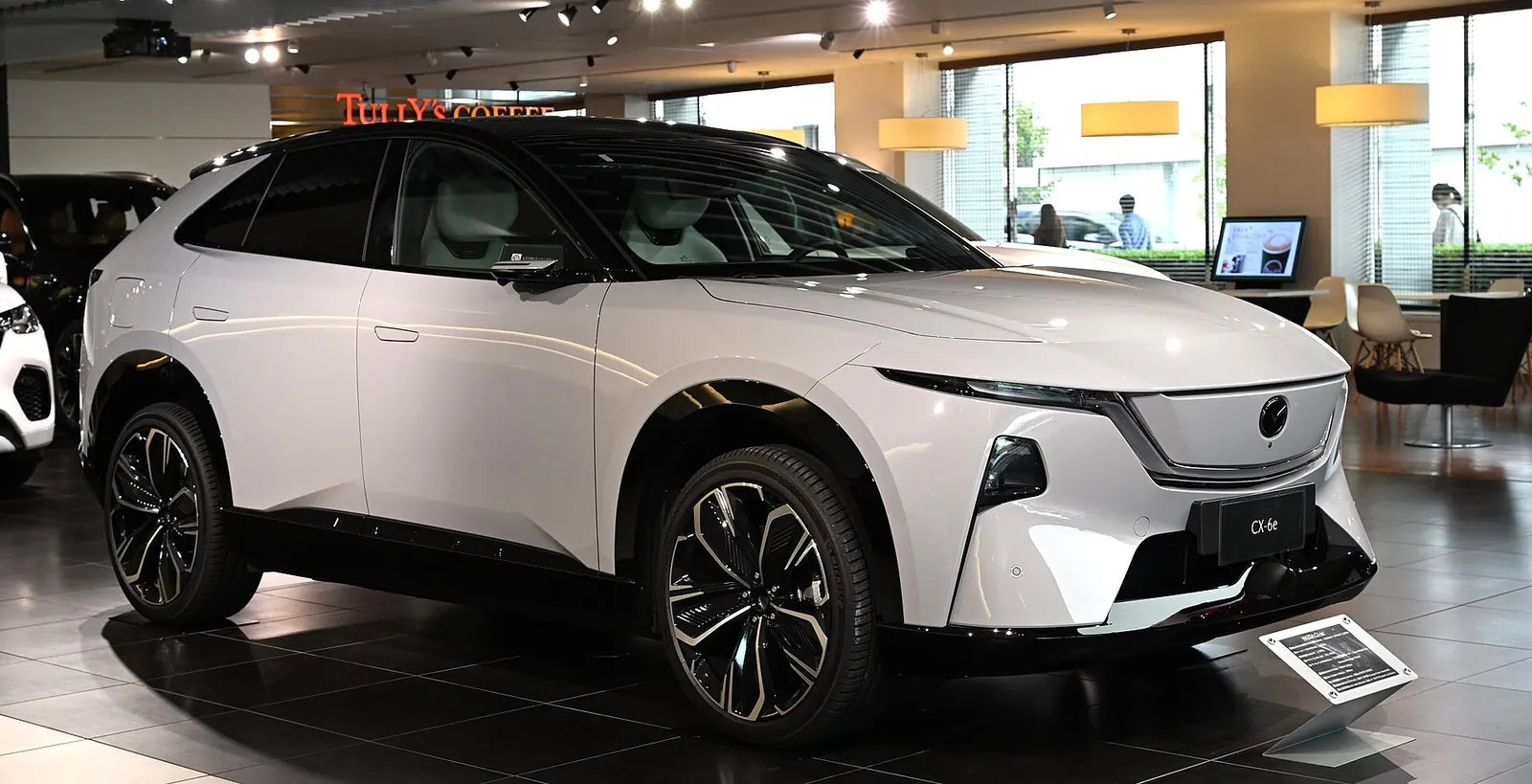
Ask an EV owner what it costs to charge at home and you'll get answers from "almost nothing" to "about the same as petrol". Both can be true. Your electricity network, your tariff and, most of all, the hour you plug in decide the bill.
Victoria makes this easier to work out than most states. Each year the Essential Services Commission (ESC) sets the Victorian Default Offer (VDO), the regulated price for households on a standing offer, for each of the five electricity networks. The 2026–27 prices have applied since 1 July 2026 and run to 30 June 2027. We used them to put real numbers on home charging.
The short answer
On the VDO, electricity for your car costs between 16.59c and 17.65c a kilowatt-hour (kWh) if you charge in the middle of the day, 21.17c to 22.60c overnight, and 37.57c to 47.64c if you plug in during the 4pm–9pm peak. For a typical mid-size electric SUV, that's roughly $2.99–$3.18 per 100 km in the solar soak window and $3.81–$4.07 overnight, against about $16.92 per 100 km for a petrol SUV using 7.0 L/100 km at last week's Melbourne average of 241.7 cents a litre.
What a kilowatt-hour costs on each network
The VDO comes in two shapes. The flat tariff charges the same rate all day. The time-of-use tariff has three rates: peak from 4pm to 9pm, a cheap "solar soak" rate from 11am to 4pm, and off-peak at all other times, which covers overnight. All prices include GST.
| Network | Area (broadly) | Flat | Peak 4–9pm | Off-peak | Solar soak 11am–4pm |
|---|---|---|---|---|---|
| AusNet Services | Eastern Victoria and Melbourne’s outer north and east | 31.98c | 47.64c | 22.60c | 17.59c |
| CitiPower | Melbourne CBD and inner suburbs | 25.96c | 38.31c | 21.17c | 16.59c |
| Jemena | Melbourne’s north and north-west | 27.47c | 37.57c | 21.76c | 17.65c |
| Powercor | Western Victoria and Melbourne’s west | 28.22c | 41.67c | 22.49c | 17.26c |
| United Energy | Melbourne’s south-east and the Mornington Peninsula | 27.35c | 40.32c | 22.14c | 17.26c |
Two things stand out. CitiPower customers in inner Melbourne pay the least on the flat tariff, and AusNet customers in the east pay the most, about six cents more per kWh. And on every network the peak rate is more than double the solar soak rate. That gap matters far more to an EV owner than which network you're on.
Not sure which network you're on? Your electricity bill names your distributor.
Cost per 100 km: three types of EV
To turn a price per kWh into a cost per kilometre, you need your car's energy use. Manufacturers quote a WLTP consumption figure, and the federal Green Vehicle Guide publishes official energy-use figures for new models. Real-world use from the wall, including the energy lost as heat while charging, tends to be a bit higher. We've used three round figures that cover most of the market:
| Energy use (per 100 km, from the wall) | Typical of | Solar soak | Off-peak (overnight) | Flat tariff | Peak |
|---|---|---|---|---|---|
| 15 kWh | Efficient small car or sedan | $2.49–$2.65 | $3.18–$3.39 | $3.89–$4.80 | $5.64–$7.15 |
| 18 kWh | Typical mid-size SUV | $2.99–$3.18 | $3.81–$4.07 | $4.67–$5.76 | $6.76–$8.58 |
| 22 kWh | Large or seven-seat SUV | $3.65–$3.88 | $4.66–$4.97 | $5.71–$7.04 | $8.27–$10.48 |
Ranges run from the cheapest to the dearest network. The pattern is simple: charging during the day on a time-of-use plan costs about half as much as plugging in when you get home from work at 6pm.
What a top-up costs in five new EVs
Most owners charge between about 10% and 80% rather than from empty, so we priced that window: 70% of each car's battery, using the capacity published by its Australian distributor. Charging losses would add a little to each figure.
| Car | Battery (maker figure) | Energy for 10–80% | Off-peak | Solar soak | Flat tariff |
|---|---|---|---|---|---|
| Leapmotor B03X Style | 39.8 kWh | 27.9 kWh | $5.90–$6.30 | $4.62–$4.92 | $7.23–$8.91 |
| Leapmotor B10 Style | 56.2 kWh | 39.3 kWh | $8.33–$8.89 | $6.53–$6.94 | $10.21–$12.58 |
| Lepas L6 | 65 kWh | 45.5 kWh | $9.63–$10.28 | $7.55–$8.03 | $11.81–$14.55 |
| Mazda CX-6e | 78 kWh | 54.6 kWh | $11.56–$12.34 | $9.06–$9.64 | $14.17–$17.46 |
| Kia EV9 (99.8 kWh) | 99.8 kWh | 69.9 kWh | $14.79–$15.79 | $11.59–$12.33 | $18.14–$22.34 |
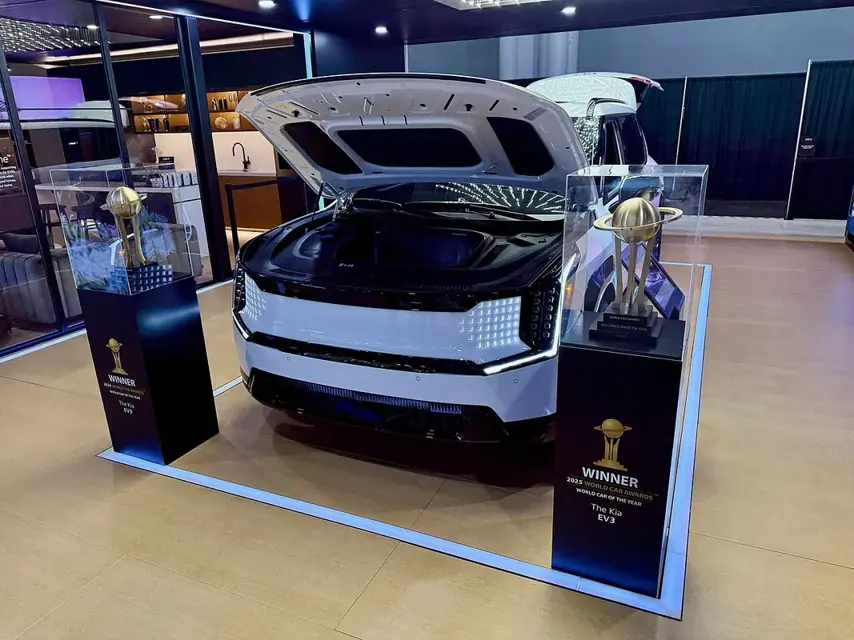
Even the biggest battery here, the Kia EV9's 99.8 kWh pack, costs less than $16 to take from 10% to 80% overnight on any network. A Leapmotor B03X Style does the same for between $4.62 and $8.91, depending on the time and network.
A year of driving
Take a mid-size EV using 18 kWh per 100 km and a household that drives 12,000 km a year. That's 2,160 kWh of electricity. On the VDO it costs:
- about $358.34–$381.24 a year if all of it went in during the solar soak window;
- about $457.27–$488.16 charging overnight at the off-peak rate;
- about $560.74–$690.77 on the flat tariff;
- about $811.51–$1,029.02 if every charge happened in the 4pm–9pm peak.
For comparison, 12,000 km in a petrol SUV at 7.0 L/100 km and 241.7 cents a litre is about $2,030.28 in fuel. Nobody charges only at peak or only at noon, so a real household lands somewhere in between, but the order of magnitude is clear.
The daily supply charge, between $1.19 and $1.38 a day on the VDO, doesn't change when you buy an EV, because you're already paying it. Only the energy you use is extra.
What about the other states?
Every other state and territory also has a regulated or default electricity price. In New South Wales, South East Queensland and South Australia it's the Australian Energy Regulator's Default Market Offer (DMO). Since this year the DMO caps the actual usage and supply rates, not just the annual bill. Western Australia, Tasmania, the ACT and the Northern Territory set their prices through their own government or regulator. Here are the flat (anytime) rates for 2026–27, all including GST, with the cost per 100 km for the same 18 kWh mid-size SUV. Alongside is a 7.0 L/100 km petrol SUV at each capital's average unleaded price for the week ending 18 October 2026.
| State | Network or retailer | Tariff | Flat rate | Supply ($/day) | EV per 100 km | Petrol per 100 km |
|---|---|---|---|---|---|---|
| NSW | Ausgrid (Sydney, Central Coast, Hunter) | AER DMO | 33.14c | 1.66 | $5.96 | $16.89 (Sydney) |
| NSW | Endeavour Energy (Western Sydney, Illawarra) | AER DMO | 33.73c | 1.85 | $6.07 | $16.89 (Sydney) |
| NSW | Essential Energy (regional NSW) | AER DMO | 35.01c | 2.72 | $6.30 | $16.89 (Sydney) |
| QLD | Energex (South East Queensland) | AER DMO | 27.97c | 1.92 | $5.04 | $16.79 (Brisbane) |
| SA | SA Power Networks | AER DMO | 41.91c | 1.80 | $7.54 | $16.58 (Adelaide) |
| WA | Synergy, South West grid | Home Plan (A1) | 33.26c | 1.19 | $5.99 | $16.69 (Perth) |
| TAS | Aurora Energy | Tariff 31 (closed to new connections) | 27.95c | 1.68 | $5.03 | $17.50 (Hobart) |
| ACT | ActewAGL | Home standing offer | 36.95c | 1.34 | $6.65 | $17.24 (Canberra) |
| NT | Jacana Energy | Standard residential | 31.68c | 0.62 | $5.70 | not in AIP report |
On a flat rate, an EV costs between about $5 and $7.50 per 100 km to charge anywhere in Australia. That's well under half the cost of petrol. South Australia has the highest regulated flat rate in the country. Energex customers in South East Queensland and Tasmanians still on Tariff 31 have the lowest.
Some states also have regulated time-of-use plans that suit EV owners even better:
- WA: Synergy's EV Add On charges 19.92c overnight (11pm–6am), or $3.59 per 100 km. Its Midday Saver plan charges 8.85c from 9am to 3pm, which is just $1.59 per 100 km if the car is home during the day.
- Tasmania: Aurora's Tariff 93 charges 17.02c off-peak, which covers overnight, the middle of weekdays and all weekend. That's $3.06 per 100 km.
- ACT: ActewAGL's Home Daytime Economy plan charges 17.60c from 11am to 3pm, or $3.17 per 100 km.
- NSW, Queensland and SA: the DMO also caps time-of-use and new "Solar Sharer" plans, which include three hours of free usage in the middle of the day. Retailers' market offers usually sit below the cap, so compare them on Energy Made Easy.
Regional Queensland (Ergon) and regional WA (Horizon Power) have separate prices that we haven't included here.
Five ways to pay less
- Use the timer. Almost every EV and wallbox can schedule charging. Set it to start after 9pm, or between 11am and 4pm if the car is home during the day.
- Check your tariff. On a flat tariff the time doesn't matter, so you can't benefit from cheap hours. Ask your retailer whether a time-of-use plan suits your household.
- Compare market offers. The VDO is the regulated standing offer. Retailers' market offers can be cheaper, and some are designed for EV owners with low overnight rates. The Victorian Energy Compare website lists them.
- Soak up your own solar. If you have rooftop panels, midday charging uses power you'd otherwise export for a small feed-in credit.
- Don't charge to 100% every night. A smaller daily top-up fits more easily into the cheap windows and many manufacturers recommend a daily limit below 100% anyway.
Our take
At today's regulated prices, a Victorian who charges at home outside the evening peak pays roughly a quarter of what a petrol driver pays per kilometre. Getting the timing right is worth more than any choice of car: a mid-size SUV charged at noon costs less to run than a small car charged at 6pm.
If you're still choosing a car, the EV Select database lists battery size, WLTP range and real-world highway results for 312 Australian variants, so you can plug your own numbers into the tables above.
- Essential Services Commission, Victorian Default Offer 2026–27 Price Determination (20 May 2026)
- Essential Services Commission, Victorian Default Offer
- Australian Energy Regulator, Default market offer prices 2026–27: Final determination (26 May 2026)
- Synergy, regulated tariffs from 1 July 2026
- Aurora Energy, residential prices from 1 July 2026 (approved by the Office of the Tasmanian Economic Regulator)
- ActewAGL, ACT standard plan electricity prices from 1 July 2026
- ICRC, Retail electricity price recalibration 2026–27
- Jacana Energy, residential pricing from 1 July 2026
- Australian Government, Energy Made Easy
- Australian Institute of Petroleum, Weekly Petrol Prices Report, week ending 18 October 2026
- Australian Government, Green Vehicle Guide
- Victorian Government, Victorian Energy Compare
- Leapmotor B03X Style: Australian specifications
- Leapmotor B10 Style: Australian specifications
- Lepas L6: Australian specifications
- Mazda CX-6e: Australian specifications
- Kia EV9: Australian specifications