Every EV brochure in Australia quotes a WLTP range. It's a handy way to compare cars, but it comes from a lab cycle full of slow, stop-start driving. Hold a steady highway speed and every electric car falls short of its sticker. The real question is by how much, and for a lot of the cars Australians are buying right now, nobody has measured it yet.
We matched independent highway range tests to the cars in the EV Select database. After this week's update, 66 of our 304 Australian variants carry a real-world result. That still leaves plenty of popular cars without one, and that gap is what this story is mostly about.
Two testers, two speeds
Bjørn Nyland (120 km/h). The Norwegian tester drives a fixed route at a steady 120 km/h until the battery is flat and records the weather. His cars are European-market versions, so we only match a result to an Australian variant when the battery and drivetrain line up. Norway is cold, too, and several results were logged in single-digit temperatures or on winter tyres, which cut range. We show the conditions beside every result.
Out of Spec Reviews (70 mph, or 113 km/h). Kyle Conner's US team charges to 100%, sets 70 mph on GPS and drives, usually on a flat loop through Colorado, Wyoming and Nebraska, until the car can't hold speed, then keeps going on frontage roads until it stops. That means their figures include the reserve hidden below 0%. Their cars are US-market versions, so we use a result only when the US car's battery and drivetrain match the Australian one, and we flag any other difference, such as wheel size.
Because the speeds, climate and method differ, we never rank the two sets of results together. The Tesla Model Y Long Range AWD shows why. Bjørn got 371 km at 120 km/h on winter tyres at 11°C. Out of Spec got 476 km at 70 mph in mild weather, despite a 30 mph-plus wind. Same car, a 105 km gap.
The ten longest-range EVs at 120 km/h
BJØRN NYLAND · 120 KM/H · EUROPEAN-MARKET CARS
| # | Tested car | Range at 120 km/h | Conditions |
|---|---|---|---|
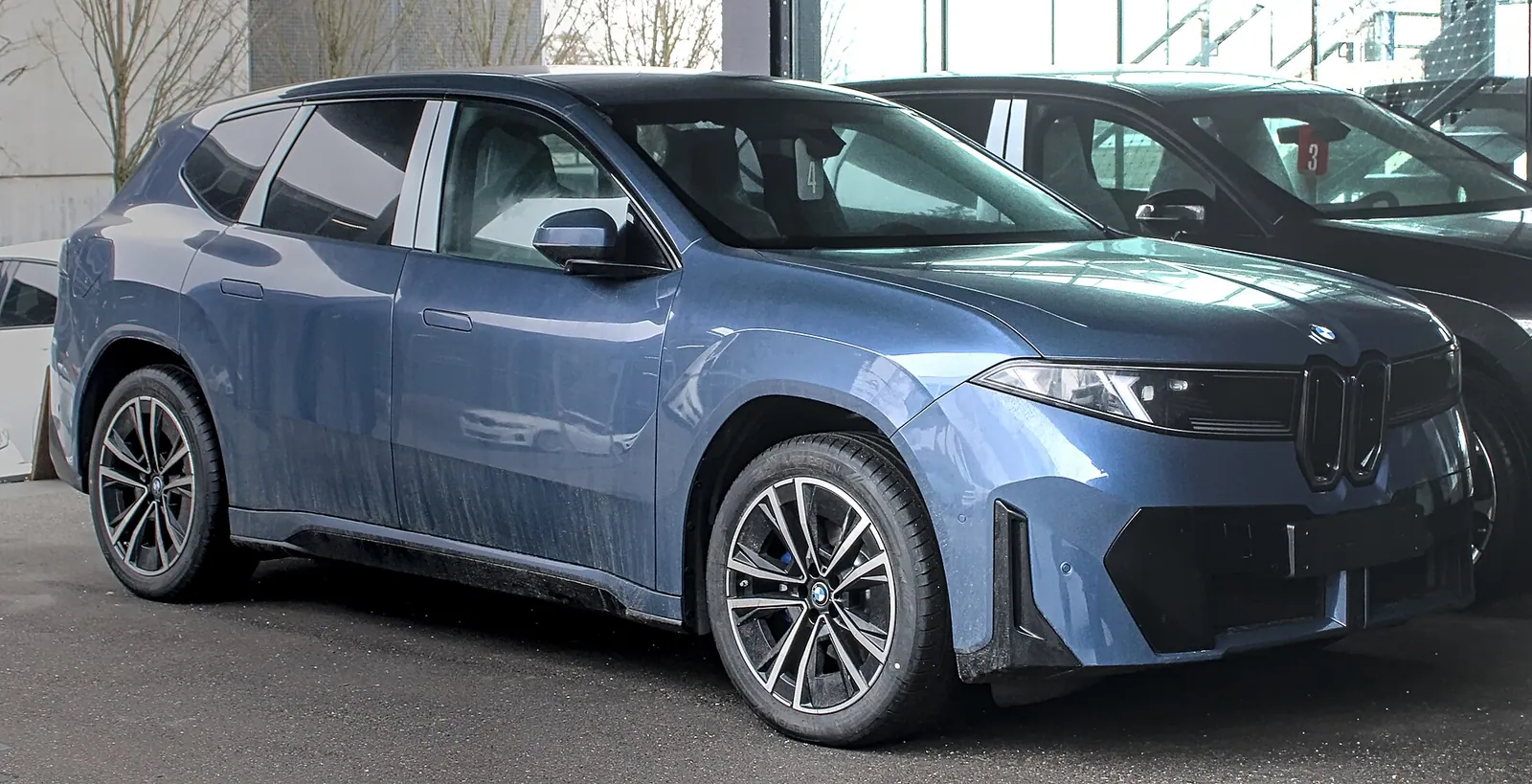
| 1 | BMW iX3 50 xDrive (new generation) | 511 km | 17°C, dry |
| 2 | Tesla Model 3 Long Range RWD | 483 km | 19°C, dry |
| 3 | Mercedes-Benz CLA 350 4MATIC | 477 km | 12°C, dry |
| 4 | Mercedes-Benz GLC 400 4MATIC | 475 km | 17°C, dry |
| 5 | XPeng X9 Performance | 452 km | 19°C, dry |
| 6 | Mercedes-Benz GLB 350 4MATIC | 424 km | 18°C, dry |
| 7 | Polestar 3 Long Range Dual Motor | 409 km | 19°C, dry |
| 8 | Zeekr 7X Performance AWD | 405 km | 21°C, dry |
| 9 | Polestar 4 Long Range Dual Motor | 397 km | 11°C, dry |
| 10 | Tesla Model 3 Performance | 388 km | 9°C, dry, winter tyres |
The new BMW iX3 leads, and it's the only car in our data to pass 500 km at this speed. The Tesla Model 3 Long Range RWD comes close with a much smaller battery. It used the least energy of any car in the top ten (160 Wh/km in the test), and Tesla's Australian price list has it at $61,900 before on-road costs. Mercedes takes three of the top six places with its new-generation CLA, GLC and GLB.
Big sellers still waiting for a highway test
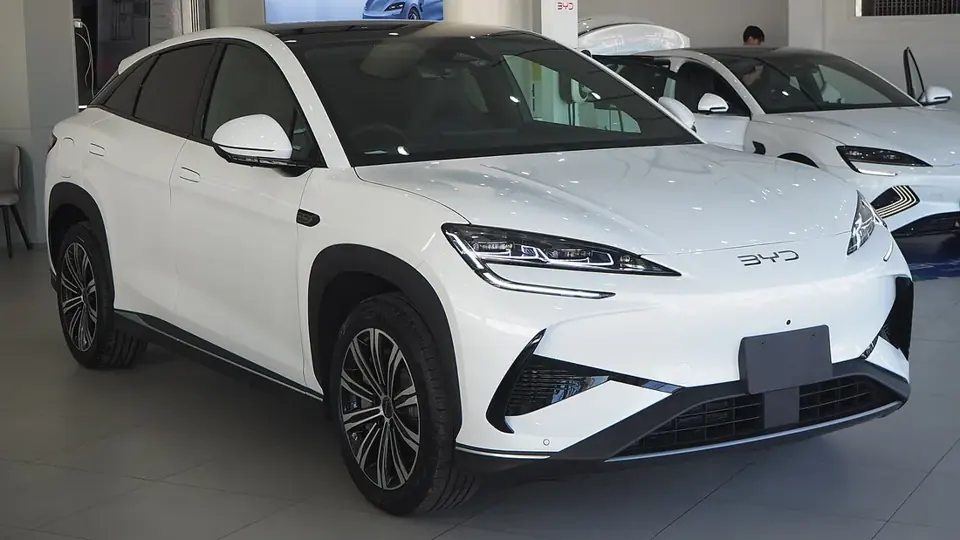
Plenty of the cars Australians are buying right now have no independent highway result at all. These are all on sale here, and none of them yet has a test in our database that matches the local version:
- BYD Sealion 7 (rear-drive)
- Kia EV5 (every variant)
- Zeekr 7X (rear-drive versions)
- Mazda CX-6e and Mazda 6e
- Geely EX5
- Toyota bZ4X
- Tesla Model Y Premium RWD (we haven't been able to match it to the US car of the same name)
For a rough idea in the meantime, use our 60% rule of thumb, explained below. Some other popular cars do have a result, just not from Bjørn. That's where Out of Spec's 70 mph tests come in.
Filling gaps with Out of Spec's 70 mph tests
Bjørn hasn't tested these five cars on sale here, but Out of Spec has run the US version of each. We note every difference between the US test car and the Australian one. These results sit in their own table, because they were driven slower, in different weather, and further past 0%.
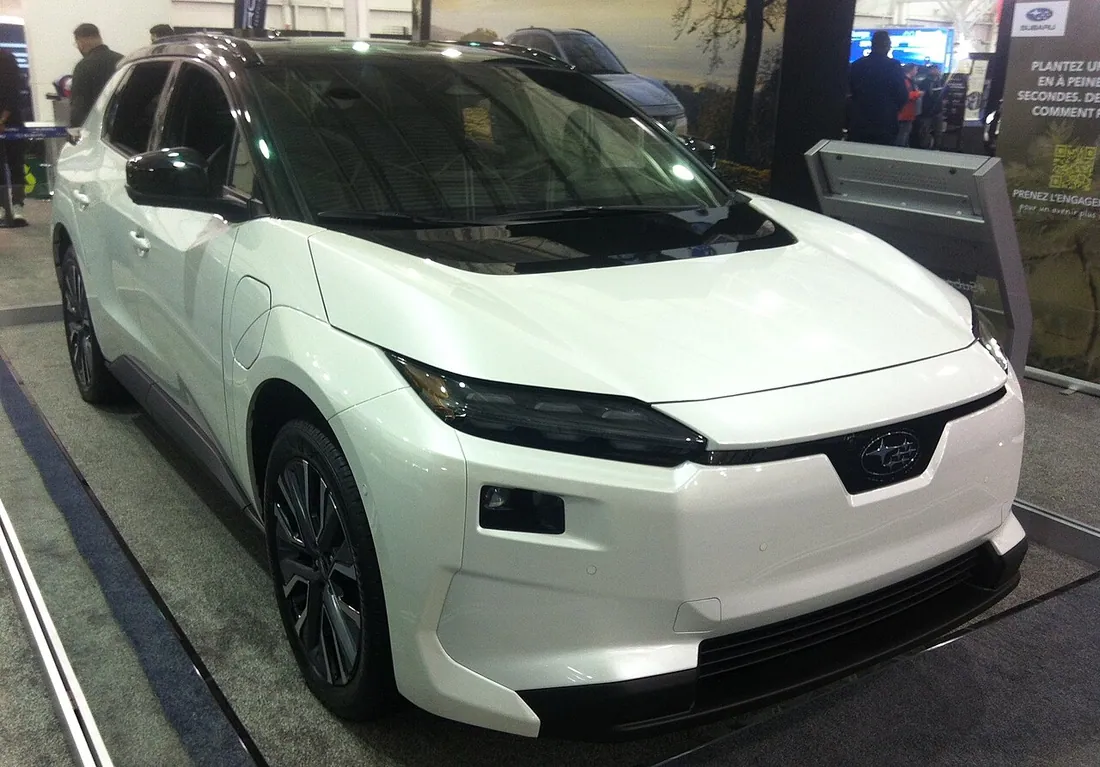
OUT OF SPEC REVIEWS · 70 MPH (113 KM/H) · US-MARKET CARS
| Australian variant | Range at 113 km/h | Conditions | US test car vs Australian car |
|---|---|---|---|
| Tesla Model Y L | 512 km (318 mi) | Warm and sunny, North Carolina | Same six-seat, dual-motor Model Y L. Test car on optional 20-inch wheels; Australian cars get 19s. Driven on a North Carolina route, not Out of Spec's usual Colorado loop. |
| Porsche Macan Turbo | 470 km (292 mi) | 9–19°C | Same 100 kWh battery and twin motors. Test car on 22-inch wheels, one size up from standard. |
| Volvo EX90 Ultra Twin Motor Performance | 422 km (262 mi) | 31°C, calm | Same updated 800 V model with the twin-motor Performance drivetrain. Out of Spec quotes 102 kWh usable; Volvo Australia quotes 106 kWh nominal. Test car on 21-inch wheels; Volvo Australia lists 20- and 22-inch wheels. |
| Subaru Solterra Touring AWD | 374 km (233 mi) | 23°C, calm | Same 74.7 kWh battery, 252 kW twin motors and 20-inch wheels (US name: Touring XT). |
| Fiat 500e La Prima | 198 km (123 mi) | 17–25°C, 15–20 mph crosswind | Same 42 kWh battery and 87 kW motor. |
The Model Y L goes furthest, at 512 km, or about 75% of its 681 km WLTP rating. That's despite the larger optional wheels, which usually cost range. The Macan Turbo is next at 470 km, and the big seven-seat EX90 covers a respectable 422 km despite a hot day. The Solterra is the most mainstream family SUV here, and at 374 km it delivered about 72% of its 517 km WLTP rating. The Fiat 500e is a city car, and its 198 km result, recorded in a stiff crosswind, says so.
Don't apply the 60% rule below to these figures. Because Out of Spec drives slower and runs the car right down past 0%, its results land closer to WLTP. The Model Y Long Range managed 79% of WLTP in Out of Spec's test, against 62% in Bjørn's.
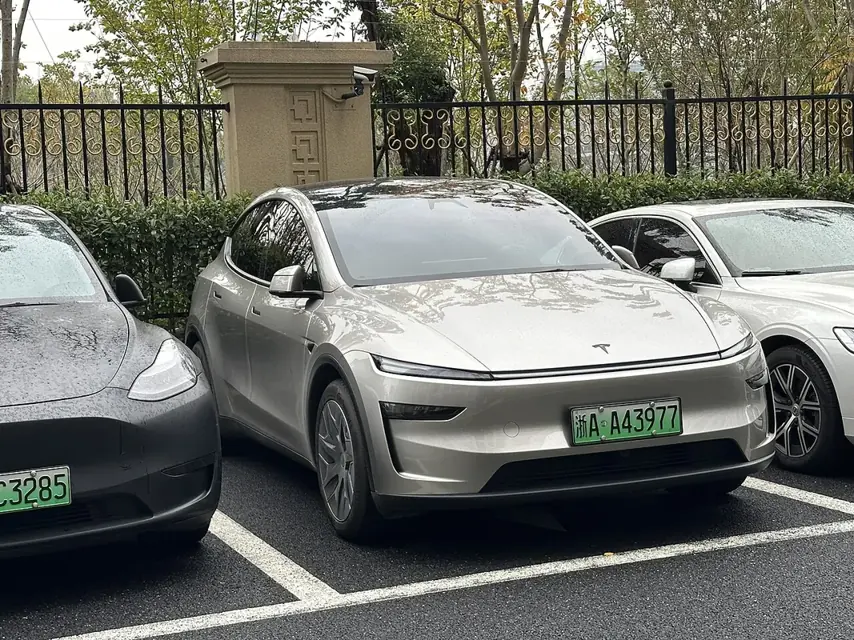
The Model Y L shows how much is still missing. Its only highway result so far is Out of Spec's 70 mph run in the US, on bigger wheels than Australian cars get. Nobody has tested it at 120 km/h, and nobody has tested it on Australian roads.
Coming soon: range tests on Australian roads
Overseas tests can only take us so far. Their cars, speeds and weather aren't ours. So EV Select is setting up its own range tests, run in Australia at a steady 110 km/h, the speed limit on most of our major highways. First up are the cars nobody has tested here, starting with the Model Y L. Results will go straight onto the car cards and into this article.
The rule of thumb: about 60% of WLTP at 120 km/h
For the 28 cars Bjørn tested where the Australian distributor publishes a WLTP figure, we divided the 120 km/h result by the brochure number. The middle result was about 62%. Half the cars landed between roughly 60% and 66%. The full spread ran from 50% (a Hyundai Kona tested at −5°C on winter tyres) to 74% (a BMW iX2 in mild, dry weather).
| Car | WLTP (AU brochure) | Tested at 120 km/h | Share of WLTP |
|---|---|---|---|
| BMW iX3 50 xDrive | 805 km | 511 km | 63% |
| Tesla Model 3 Long Range RWD | 750 km | 483 km | 64% |
| Kia EV4 Long Range | 612 km | 382 km | 62% |
| Tesla Model 3 RWD (new base car) | 572 km | 343 km | 60% |
| BYD Dolphin (60 kWh) | 427 km | 267 km | 63% |
| BMW iX2 xDrive30 | 395 km | 292 km | 74% |
So for a quick estimate on a car nobody has tested, take its WLTP range and multiply by 0.6. That gives a sensible full-battery figure at 120 km/h in mild weather. Expect a bit less in a cold Canberra winter, and a bit more at 100 or 110 km/h.
What it means on a road trip
Nobody drives from 100% to empty. On a long trip you'll usually pull into a fast charger with about 10% left and leave at about 80%, because charging slows down above that. That window is about 70% of the battery. On our numbers, a car that does 483 km at 120 km/h covers roughly 340 km between fast-charge stops, and a 343 km car covers about 240 km. Plan around those distances, not the brochure figure.
That's why the new $45,900 Tesla Model 3 RWD is worth a look for country driving. It managed 343 km at 120 km/h, within a few kilometres of the BYD Seal Performance (342 km) and Kia EV3 Long Range (337 km). Smaller cars sit lower on the list. The Leapmotor B10 (272 km), BYD Dolphin 60 kWh (267 km) and BYD Atto 3 60 kWh (248 km) are fine for regional trips, but they'll stop more often.
Our verdict
If highway range is your top priority, the tested shortlist is the BMW iX3, the Model 3 Long Range and Mercedes' new CLA, GLC and GLB. If you're watching the budget too, start with the Model 3 Long Range. If you're looking at one of the untested big sellers, like the Sealion 7 or the EV5, multiply the WLTP figure by 0.6 for now. Families eyeing the Model Y L can take heart from its 512 km Out of Spec result, and we'll add our own 110 km/h figure when it's ready.
Every matched car card in the EV Select database shows the test result, the speed, the conditions and a link to the source. We'll add cars as they're tested.
- Bjørn Nyland range test results (120 km/h runs), TB Test Results database
- Out of Spec Studios, 70 mph range test procedure and results table
- Out of Spec range test spreadsheet (2026 results)
- Out of Spec Reviews, Porsche Macan Turbo Electric 70 mph highway range test
- Out of Spec, Volvo EX90 Twin Motor 70 mph range test (SPA2 upgraded)
- Out of Spec, 2026 Subaru Solterra 70 mph range test
- Out of Spec Reviews, Tesla Model Y L highway range test
- Tesla Australia, Model Y and Model Y L specifications
- Volvo Cars Australia, EX90 specifications
- Subaru Australia, Solterra specifications
- Porsche Australia newsroom, all-electric Macan
- Fiat Australia, 500e
- BMW Australia, iX3
- Tesla Australia, Model 3 specifications and pricing
- Kia Australia, EV4 brochure
- BYD Australia, model range
- BMW Australia, iX2 technical data