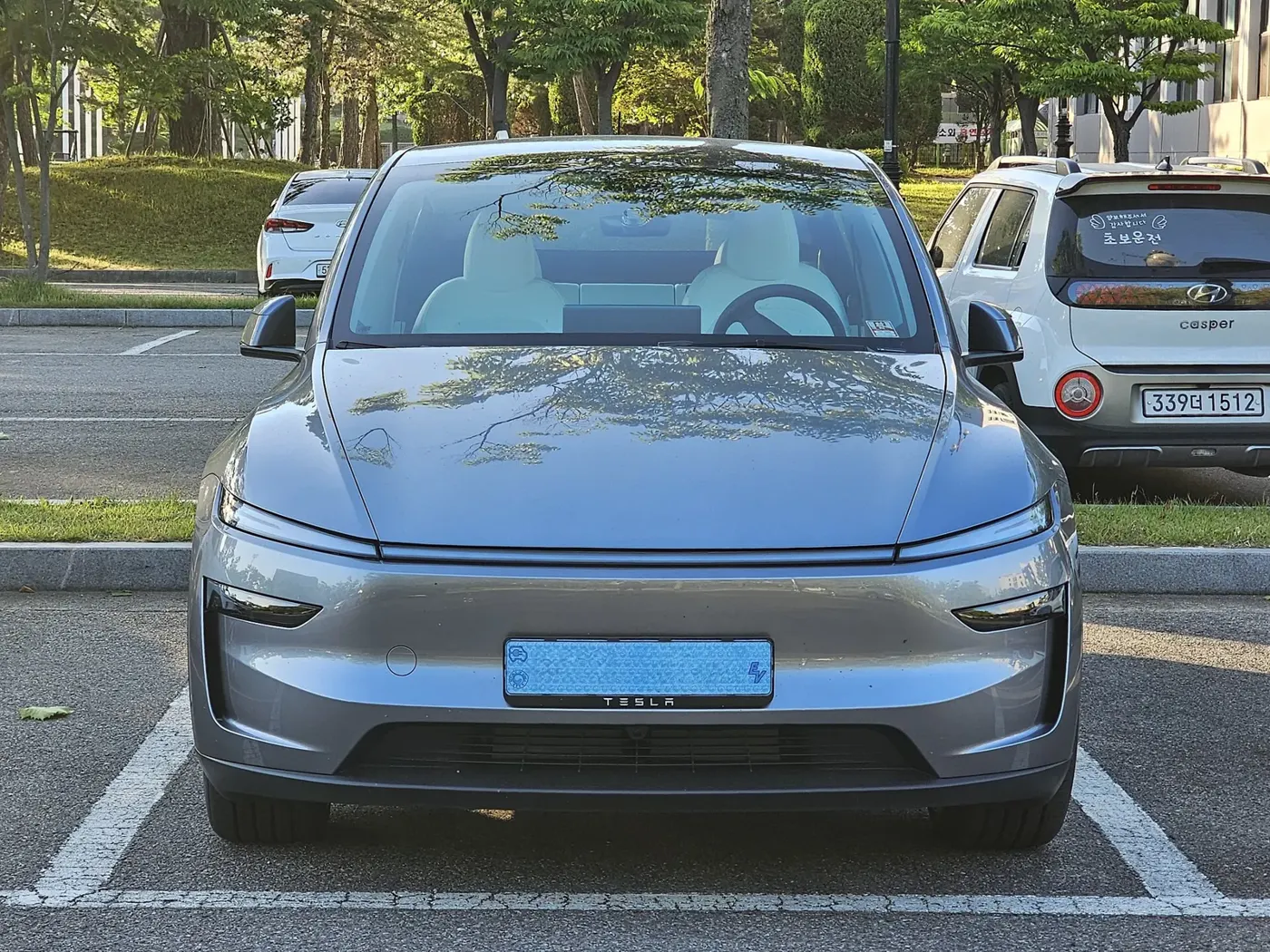
There are two levels of "car as a battery". The simpler one, vehicle-to-load (V2L), runs appliances plugged into the car. The bigger one, vehicle-to-home (V2H), feeds the house wiring during a blackout. Tesla now offers both under the Powershare name, but not in every country.
What Australian owners have today
On 2 October, Tesla Australia announced that Powershare V2L is now available on new Model 3 and Model Y. Tesla describes using the car's battery with its Outlet Adapter to run devices like space heaters, e-bikes and power tools. Tesla has not announced home backup for Australian Model 3 or Model Y.
What US owners now get
According to Tesla's Powershare page, all new Model 3 and Model Y ordered in the US and Puerto Rico on or after 1 October 2026 can do Powershare, as can some earlier builds. Owners can check under Software › Additional Vehicle Info for "Powershare Support: Enabled". The bidirectional capability comes from an inverter Tesla calls PCS2 Lite, certified to the US UL1741 standard.
For these cars, home backup works through a Powerwall 3 and a Gen 3 or Universal Wall Connector, with no extra gateway needed. Tesla estimates a Model 3 or Model Y extends a Powerwall's backup by more than two days, based on a 30 kWh-a-day US home, at up to 11.5 kW. Selling power back to the grid isn't offered on Model 3 or Model Y.
Why Australia is different
Tesla's US equipment is certified to US electrical standards at 240 V split-phase. Anything that feeds a home here has to meet Australian grid-connection rules, and Tesla hasn't announced a local version. Until it does, treat V2L as the feature you're paying for.
Our advice
If backup power is a must-have, ask the manufacturer in writing which bidirectional modes are approved in Australia for the exact car you're buying, and check our EV database. If you're happy to run a fridge or tools from an adaptor, a new Model 3 or Y already does that.