The short answer
For most people the Tesla Wall Connector (Gen 3) is the best home charger: about $770–$800, a long tethered Type 2 cable that works with every current Australian EV, and Tesla's long record for reliable hardware. If you have rooftop solar and want the car to soak up power you'd otherwise export for a few cents, buy a solar-matching charger instead. The myenergi zappi works with any solar system, the Ocular IQ Home Solar is the best value, and Fronius, Sungrow, GoodWe and Sigenergy owners should look at their inverter maker's own charger.
| Charger | Price (AUD) | Power | Solar matching | Cable |
|---|---|---|---|---|
| Tesla Wall Connector (Gen 3) Best overall | $770 at Bunnings | Up to 7 kW single phase; up to 11 kW three phase (Bunnings listing) | No | Tethered, 7.3 m |
| myenergi zappi (v2.1 multiphase) Best for solar surplus | From $1,545 on myenergi's Australian store | 7 kW single phase or 22 kW three phase (selectable) | Yes | Both |
| Fronius Wattpilot (Home / Go 22 J 2.0) Best for Fronius solar owners | $1,789 (Go 22 J, EVSE Australia) | Up to 22 kW three phase; also runs on single phase at lower power | Yes | Socket |
| Wallbox Pulsar Max Best compact smart charger | Pulsar Max AU$1,589 at Greener Race (5 m cable, no meter) | 7.4 kW single phase or 22 kW three phase | Yes | Tethered, 5 m |
| Ocular IQ Home Solar Best value solar charger | $1,195 (7 kW) or $1,479 (22 kW) at EVSE Australia | 7 kW single phase or 22 kW three phase | Yes | Both |
| Sungrow AC22E-01 Best for Sungrow inverter owners | About $719–$1,200 depending on retailer and cable length ($719 with 7 m cable at Solar Outlet) | 7.4 kW single phase; 11 or 22 kW three phase | Yes | Tethered, 5 m |
| GoodWe HCA (GW7K-HCA-20) Best for GoodWe inverter owners | About $900–$1,189 (e.g. $960, Marshall Solar and Energy) | 7 kW single phase (11 and 22 kW three-phase versions exist) | Yes | Tethered, 6 m |
| Sigenergy Sigen EVAC 7 kW (and SigenStor DC module) Best for SigenStor battery owners | Sigen EVAC 7 kW about $1,270–$1,347 | 7 kW AC single phase; DC module 12.5 or 25 kW | Yes | Both |
Built-in cable or socket?
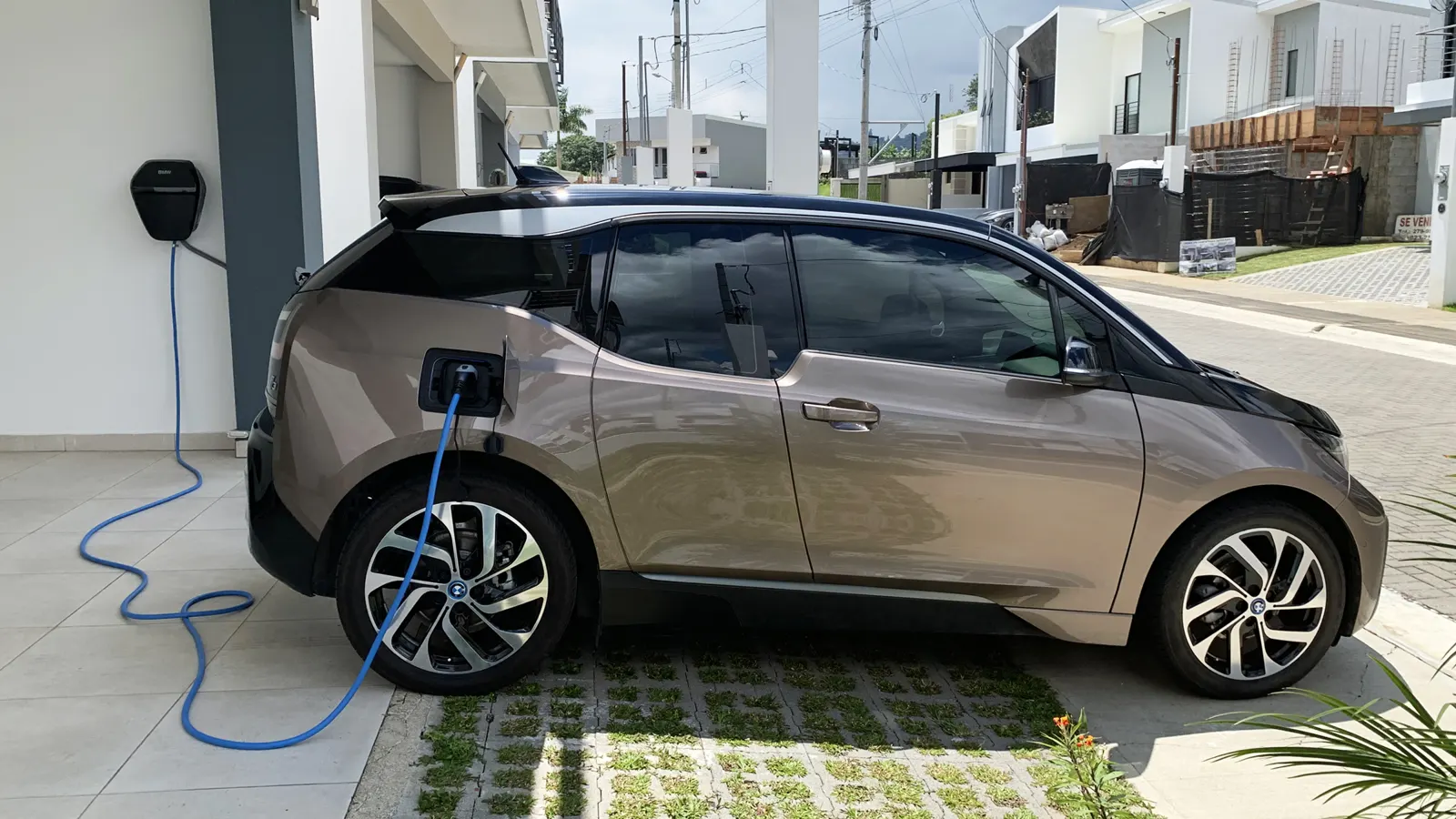
A tethered charger has its Type 2 cable permanently attached. You lift the plug off its holster and plug in the car, then hang it back up: no cable to dig out of the boot, coil or forget, and nothing left in the car for someone to steal. For a charger you use every day, that convenience is the main reason we pick tethered units, and it's a big part of why the Tesla Wall Connector, with its 7.3 m built-in cable, is our best overall choice.
An untethered (socketed) charger has a Type 2 socket instead, so you plug in your own cable each time. It looks tidier on the wall, lets you choose a cable length to suit each car or parking spot, and a damaged cable is cheap to replace. The catch is handling the cable every session. If you go socketed, budget about $200–$400 for a good Type 2 cable and leave it at home rather than in the car.
The comparison table above shows the cable type for each charger, and each entry below says which versions are sold in Australia.
1. Tesla Wall Connector (Gen 3): best overall
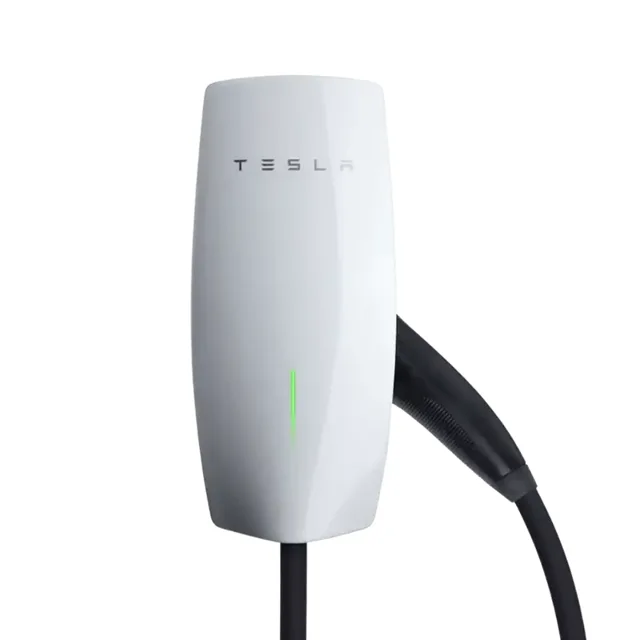
It is the cheapest name-brand wall charger we found and it has a Type 2 plug, so it charges any Australian Type 2 EV, not just Teslas. The 7.3 m tethered cable reaches most driveways. If you have solar and want the car to soak up only your surplus, pick one of the chargers below instead.
| Price | $770 at Bunnings; $800 on Tesla's shop (Tesla's shop sells only to Tesla owners and showed it out of stock) |
|---|---|
| Power | Up to 7 kW single phase; up to 11 kW three phase (Bunnings listing) |
| Solar charging | No built-in solar matching. Tesla's app can schedule charging; Tesla's 'Charge on Solar' feature needs a Tesla car and a Powerwall. |
| App / OCPP | Tesla app, Wi-Fi, over-the-air updates, power-sharing across up to six units. No OCPP. |
| Cable | Tethered: built-in 7.3 m Type 2 cable (no socketed version) |
| Warranty | 4 years (residential) |
Where to buy: Bunnings · Tesla shop
2. myenergi zappi (v2.1 multiphase): best for solar surplus
The zappi is the best-known charger that only charges from solar you'd otherwise export. Because it reads a CT clamp rather than talking to your inverter, it works with almost any solar system.
| Price | From $1,545 on myenergi's Australian store; $1,450–$1,485 via Bunnings Marketplace (sold by EV-NRG) |
|---|---|
| Power | 7 kW single phase or 22 kW three phase (selectable) |
| Solar charging | CT clamps on your mains measure export; Eco and Eco+ modes charge from surplus solar. Works with any inverter brand. |
| App / OCPP | myenergi app, Wi-Fi and Ethernet, scheduled charging |
| Cable | Both: tethered (Type 2 cable) and untethered (socket) versions sold in Australia |
| Warranty | Check at purchase (EV-NRG lists 3 years; AGL lists 2 years) |
Where to buy: myenergi Australia · Bunnings (EV-NRG)
3. Fronius Wattpilot (Home / Go 22 J 2.0): best for fronius solar owners
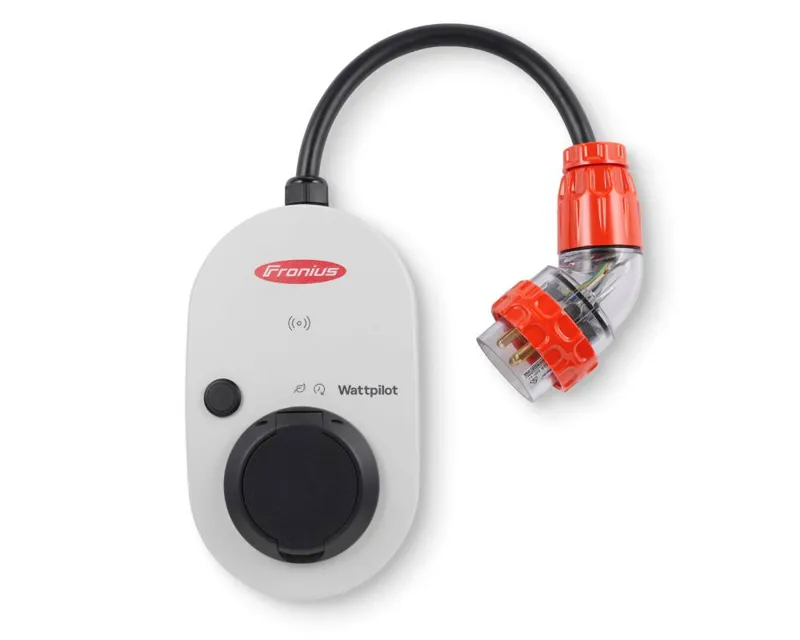
If you already have a Fronius inverter, Wattpilot is the neatest solar charger: it uses the meter you already have. The Go version plugs into a three-phase 32 A socket and can travel with you.
| Price | $1,789 (Go 22 J, EVSE Australia); about $1,890 for the Home 22 J at Fronius-authorised retailers |
|---|---|
| Power | Up to 22 kW three phase; also runs on single phase at lower power |
| Solar charging | Talks directly to a Fronius inverter and Smart Meter (no extra clamps); Eco mode charges from surplus solar and can follow cheap tariffs |
| App / OCPP | Solar.wattpilot app; OCPP |
| Cable | Socketed: Type 2 socket, bring your own cable (Home and Go) |
| Warranty | 2 years (retailer listing) |
Where to buy: EVSE Australia · Fronius Australia
4. Wallbox Pulsar Max: best compact smart charger

Small, well finished and widely sold. Budget for the power meter if you want solar charging; without it, it's a scheduled smart charger.
| Price | Pulsar Max AU$1,589 at Greener Race (5 m cable, no meter); other Australian retailers list $1,525–$1,659 depending on power rating and meter bundle |
|---|---|
| Power | 7.4 kW single phase or 22 kW three phase |
| Solar charging | Eco-Smart solar charging needs an add-on Wallbox power meter (some bundles include it) |
| App / OCPP | myWallbox app, Wi-Fi and Bluetooth; OCPP 1.6 |
| Cable | Tethered: 5 m cable (7 m option) |
| Warranty | 3 years (retailer listing) |
Where to buy: Greener Race · Wallbox Australia
5. Ocular IQ Home Solar: best value solar charger
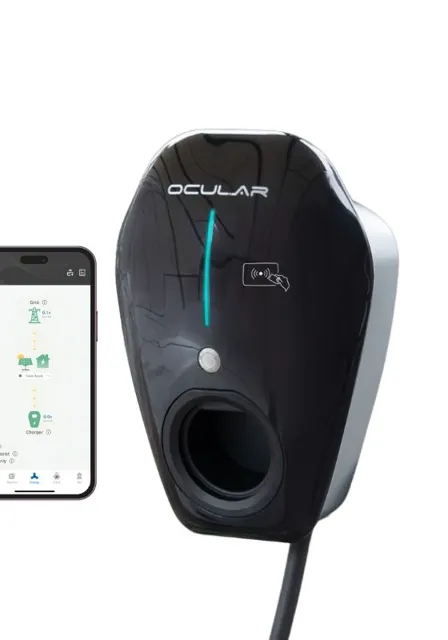
Australian-designed and cheaper than the zappi with solar clamps in the box. EVSE also runs an ARENA-backed discount for eligible south-east Queensland homes.
| Price | $1,195 (7 kW) or $1,479 (22 kW) at EVSE Australia; 22 kW also $1,479 at Bunnings (special order) |
|---|---|
| Power | 7 kW single phase or 22 kW three phase |
| Solar charging | CT clamps included; Fast, Solar Assist (minimum 6 A plus surplus) and Solar Only modes |
| App / OCPP | Ocular app; OCPP |
| Cable | Both: 7 kW sold with a 5 m tethered cable; "Universal" version has a socket |
| Warranty | 3 years |
Where to buy: EVSE Australia · Bunnings
6. Sungrow AC22E-01: best for sungrow inverter owners
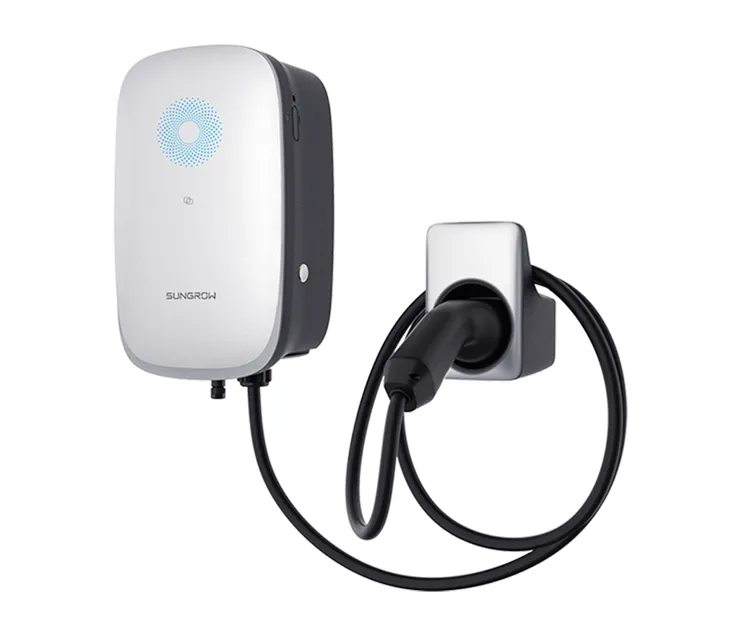
If your solar or battery is Sungrow, this is the cheapest way to get inverter-integrated solar charging.
| Price | About $719–$1,200 depending on retailer and cable length ($719 with 7 m cable at Solar Outlet) |
|---|---|
| Power | 7.4 kW single phase; 11 or 22 kW three phase |
| Solar charging | Integrates with Sungrow hybrid inverters and the iHomeManager energy manager for surplus-solar charging |
| App / OCPP | iSolarCloud app |
| Cable | Tethered: 5 m cable (7 m option) |
| Warranty | Check with retailer |
Where to buy: Solar Outlet · Marshall Solar and Energy
7. GoodWe HCA (GW7K-HCA-20): best for goodwe inverter owners
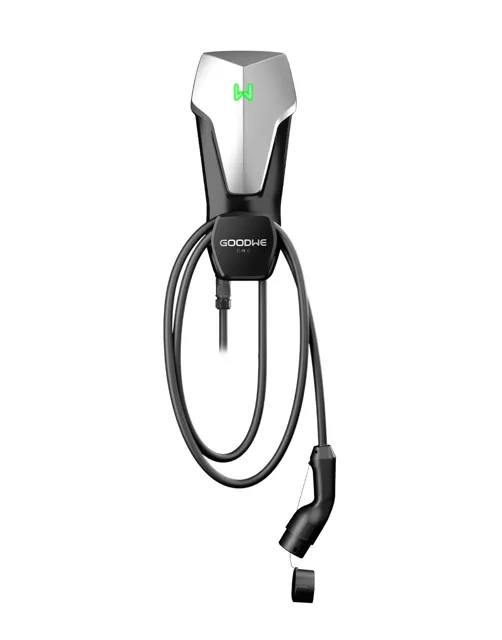
A low-cost charger that makes most sense if you already run a GoodWe inverter.
| Price | About $900–$1,189 (e.g. $960, Marshall Solar and Energy) |
|---|---|
| Power | 7 kW single phase (11 and 22 kW three-phase versions exist) |
| Solar charging | Pairs with GoodWe inverters and SEMS for surplus-solar charging |
| App / OCPP | SEMS Portal app |
| Cable | Tethered: 6 m cable (7.5 m option) |
| Warranty | Check with retailer |
Where to buy: Marshall Solar and Energy
8. Sigenergy Sigen EVAC 7 kW (and SigenStor DC module): best for sigenstor battery owners
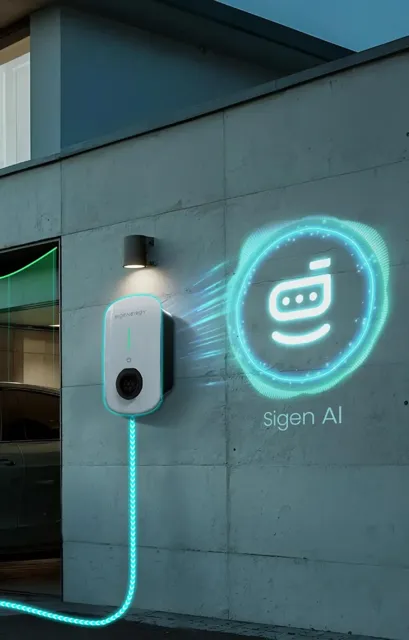
Only worth it inside a Sigenergy system, but the DC module is one of the few home chargers that can also do bidirectional charging with compatible cars.
| Price | Sigen EVAC 7 kW about $1,270–$1,347; SigenStor EV DC module from about $3,416 (12.5 kW) |
|---|---|
| Power | 7 kW AC single phase; DC module 12.5 or 25 kW |
| Solar charging | Integrates with the SigenStor inverter/battery stack; the DC module charges the car directly from solar and battery |
| App / OCPP | mySigen app |
| Cable | Both: tethered (5 m cable) and untethered socket versions sold in Australia |
| Warranty | Check with retailer |
Where to buy: Marshall Solar and Energy
What installation costs
A wall charger must be installed by a licensed electrician. Tesla puts a straightforward Wall Connector install at $750–$1,500, with long cable runs, trenching or a switchboard upgrade extra. Published fixed prices are in the same range: AGL lists $1,099 for a standard single-phase install with solar CT set-up, and EVSE Australia lists $1,320 single phase and $1,470 three phase for its solar chargers. Get two quotes and ask whether a switchboard upgrade is likely.
Single phase or three phase?
Most Australian houses have single-phase power, which caps a home charger at about 7 kW: roughly 35–50 km of range an hour, enough to refill most EVs overnight. Three-phase homes can run 11 kW or 22 kW, but many EVs accept only 11 kW on AC, so 22 kW often gains nothing. Upgrading to three phase can cost thousands; it is rarely worth it just for the car.
Do you need a wall charger at all?
Every new EV comes with, or offers, a portable "granny" charger for a normal 10 A power point. At about 2.3 kW it adds roughly 10–15 km an hour, so 10 hours overnight covers 100–150 km. If you drive less than that most days, a granny charger on a dedicated circuit may be all you need. A wall charger is faster, safer for daily heavy use, and is the only way to get solar matching.
Rebates and loans (checked 23 October 2026)
There is no national rebate for home EV chargers. In the ACT, the Sustainable Household Scheme lends $2,000–$20,000 at 3% interest over up to 10 years for products including EV charging infrastructure (households approved before 1 July 2026 are capped at $15,000). We found no other current state or territory rebate for buying a home charger; check your state energy department before you buy.
What will it cost to run?
The charger doesn't change the price of electricity, but the time you charge does. See our state-by-state cost to charge an EV at home.
- Tesla Shop Australia, Gen 3 Wall Connector
- Tesla Support Australia, Wall Connector installation and cost
- myenergi Australia, zappi
- AGL, zappi supply and installation price
- Fronius, Wattpilot technical data
- EVSE Australia, Ocular IQ Home Solar and installation prices
- ACT Government, Sustainable Household Scheme