
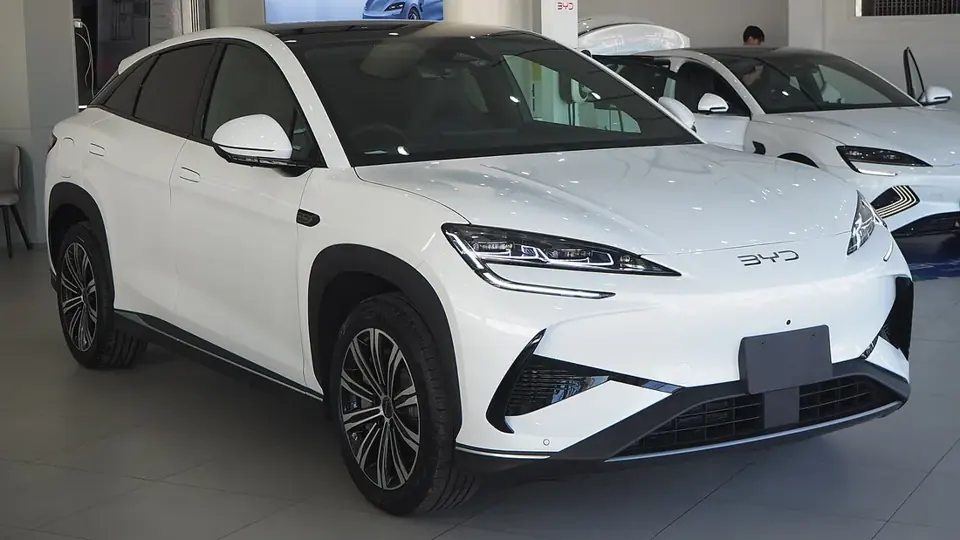
A novated lease is a three-way deal between you, your employer and a leasing company. Your employer pays the lease and the car's running costs out of your salary before income tax. For most cars that benefit is caught by fringe benefits tax (FBT), and the usual fix is to pay part of the cost from after-tax pay, which wipes out much of the saving. Since 1 July 2022, eligible electric cars have been exempt from FBT, so the whole package can come out of pre-tax salary.
Who qualifies in 2026
- The car must be a zero or low emissions car: battery electric or hydrogen fuel cell. Plug-in hybrids lost the exemption from 1 April 2025, except for arrangements already in place.
- It must be first held and used on or after 1 July 2022.
- Its value must be under the luxury car tax threshold for fuel-efficient cars at the time of first retail sale. That is $91,661 for 2026–27.
- You must be an employee whose employer offers salary packaging. The exemption covers the car and its running costs such as charging, insurance, tyres and servicing.
A worked example
Take an EV costing about $55,000. Over a five-year lease the finance, insurance, registration, servicing, tyres and home charging might come to roughly $15,000 a year. That is an illustrative figure, and your quote will differ. Every dollar of that comes out of your salary before tax, so the saving is your marginal tax rate (plus the 2% Medicare levy) times what you package.
| Taxable income | 2026–27 marginal rate + Medicare | Approx. tax saved on $15,000 packaged |
|---|---|---|
| $60,000 | 30% + 2% = 32% | $4,800 a year |
| $120,000 | 30% + 2% = 32% | $4,800 a year |
| $160,000 | 37% + 2% = 39% | $5,850 a year |
| $200,000 | 45% + 2% = 47% | $7,050 a year |
Rates from the ATO's 2026–27 resident tax table: 15% from $18,201, 30% from $45,001, 37% from $135,001, 45% from $190,001. The packaged amount must fit inside your pre-tax salary. Leasing companies also usually pass on the GST the employer claims back on the car and running costs, which adds to the saving. That's not included here.
A petrol car on the same lease would normally carry FBT on 20% of its base value each year under the statutory formula: $11,000 for a $55,000 car. To avoid that, most people pay $11,000 a year from after-tax pay, so only about $4,000 of the $15,000 gets packaged pre-tax. That difference is why EV novated leases took off.
The catches
- The balloon. At the end of the lease you owe a residual set by the ATO's minimum values: 28.13% of the cost for a five-year lease, 37.5% for four years and 46.88% for three. On a $55,000 car over five years that's about $15,500, which you pay, refinance or cover by selling the car.
- A reportable fringe benefit. Exempt EVs still count. The grossed-up value goes on your income statement and is used for the Medicare levy surcharge, HELP and other study loan repayments, child support and some family payments. That can claw back part of the saving.
- Fees and bundled extras. Admin fees, interest rates and the provider's insurance and tyre bundles vary a lot. Compare the total cost over the lease, not the weekly figure.
- Changing jobs. If your new employer won't take over the lease, it reverts to you as an ordinary car loan.
State incentives: what's left in 2026
No state pays an EV purchase rebate any more. The last, Western Australia's, ended on 10 May 2025. A novated lease is now the main saving, but a few states still cut on-road costs:
- NT: no stamp duty on EVs up to $50,000 and no registration fees until 30 June 2027.
- QLD: 2% stamp duty on EVs up to $100,000, lower than for petrol cars.
- ACT: the lowest EV duty and registration in the country, plus Sustainable Household Scheme loans of up to $20,000.
- VIC: a flat 4.2% duty, with no EV concession.
- NSW: EVs with just the driver can use T2 and T3 transit lanes until 30 June 2027.
- SA, WA and TAS: nothing EV-specific.
What changes from 1 April 2027
The government's Electric Car Discount changes are now in Parliament as Schedule 5 of the Treasury Laws Amendment (Tax Reform No. 4) Bill 2026. Under the bill, EVs with a value of $75,000 or less keep the full exemption for commitments made before 1 April 2029. Pricier EVs committed to from 1 April 2027 get a 25% FBT discount instead of a full exemption, and from 1 April 2029 every EV moves to the discount. Existing leases are protected. The bill isn't law until it passes the Senate. Our FBT changes explainer has the detail.
If you're weighing up a car near the line, the $75,000 test uses the car's base value: the price including GST and dealer delivery, but not stamp duty or registration. Most of the family SUVs in our guide and every car in our cheapest EVs list sit well below it.
This is general information, not tax or financial advice. Ask your employer, your leasing provider or a registered tax agent about your own situation.
Quick answers
How much can I save with an EV novated lease?
On about $15,000 a year of lease and running costs, roughly $4,800 a year at a 32% marginal rate (including Medicare), $5,850 at 39% and $7,050 at 47%, before GST savings and fees. Your quote will differ.
Are plug-in hybrids still FBT exempt?
No. PHEVs lost the exemption from 1 April 2025, apart from arrangements already in place before then.
What is the EV FBT price limit in 2026?
The car must be under the fuel-efficient luxury car tax threshold, which is $91,661 for 2026–27. A bill now in Parliament would limit the full exemption to EVs of $75,000 or less for commitments from 1 April 2027.
Does an exempt EV still affect my tax return?
Yes. It is a reportable fringe benefit, so its grossed-up value appears on your income statement and is used for the Medicare levy surcharge, study loan repayments, child support and some government payments.
- ATO, Electric cars exemption
- ATO, Tax rates – Australian residents
- ATO, Luxury car tax rate and thresholds
- ATO, Taxable value of a car fringe benefit (statutory formula)
- ATO, Taxation Determination TD 93/142 (minimum residual values)
- ATO, Consequences of having a reportable fringe benefits amount
- Parliament of Australia, Treasury Laws Amendment (Tax Reform No. 4) Bill 2026
- Treasury Ministers, "Fairer tax treatment to encourage affordable EVs" (5 May 2026)
- BYD Australia, current offers
- NT Government, EV registration and stamp duty concessions
- Queensland Government, Vehicle registration duty rates
- ACT Revenue Office, Motor vehicle duty
- ACT Government, Zero emissions vehicles
- State Revenue Office Victoria, Motor vehicle duty
- NSW Government, Transit lanes
- Revenue NSW, Motor vehicle duty