
For years the fast-charging number on an EV spec sheet was a peak power figure in kilowatts, or a 10–80% time. Both are useful, but neither answers the question most drivers actually have at a charger: how far will this get me if I stop for a coffee?
A new generation of 800-volt cars from BMW, Mercedes-Benz and Volvo now answers it directly. Their websites quote the range you can add in 10 minutes of DC charging. We found six models headed for, or already in, Australian showrooms with a published figure. We put them side by side, then looked at what has to go right for you to see those numbers. All six are built on 800-volt electrical systems, which BMW, Mercedes-Benz and Volvo each credit for their faster charging.
The numbers, side by side
All figures below come from each maker's Australian website, except the BMW i3 40 xDrive's, which come from BMW Group's global technical data. Where the maker gives a band, the lower number applies to the least efficient specification (bigger wheels, more equipment) and the higher number to the most efficient.
| Car | Range added in 10 minutes (WLTP) | Best case, per minute | Maximum WLTP range | 10 minutes as a share of full range | 10–80% time (charger) |
|---|---|---|---|---|---|
| BMW i3 50 xDrive | 320–423 km | 42.3 km | 912 km | 46% | 21 min (400 kW charger) |
| BMW iX3 50 xDrive | 309–372 km | 37.2 km | 805 km | 46% | 21 min (400 kW charger) |
| BMW i3 40 xDrive | 251–337 km | 33.7 km | 710 km | 47% | 21 min (300 kW charger) |
| Mercedes-Benz C 400 4MATIC electric | 250–325 km | 32.5 km | 762 km | 43% | 22 min (charger not stated) |
| Mercedes-Benz GLC 400 4MATIC electric | 240–305 km | 30.5 km | — | — | 22 min (charger not stated) |
| Volvo EX60 | up to 315 km | 31.5 km | 660 km | — | 28 min (150 kW charger, P10 AWD) |
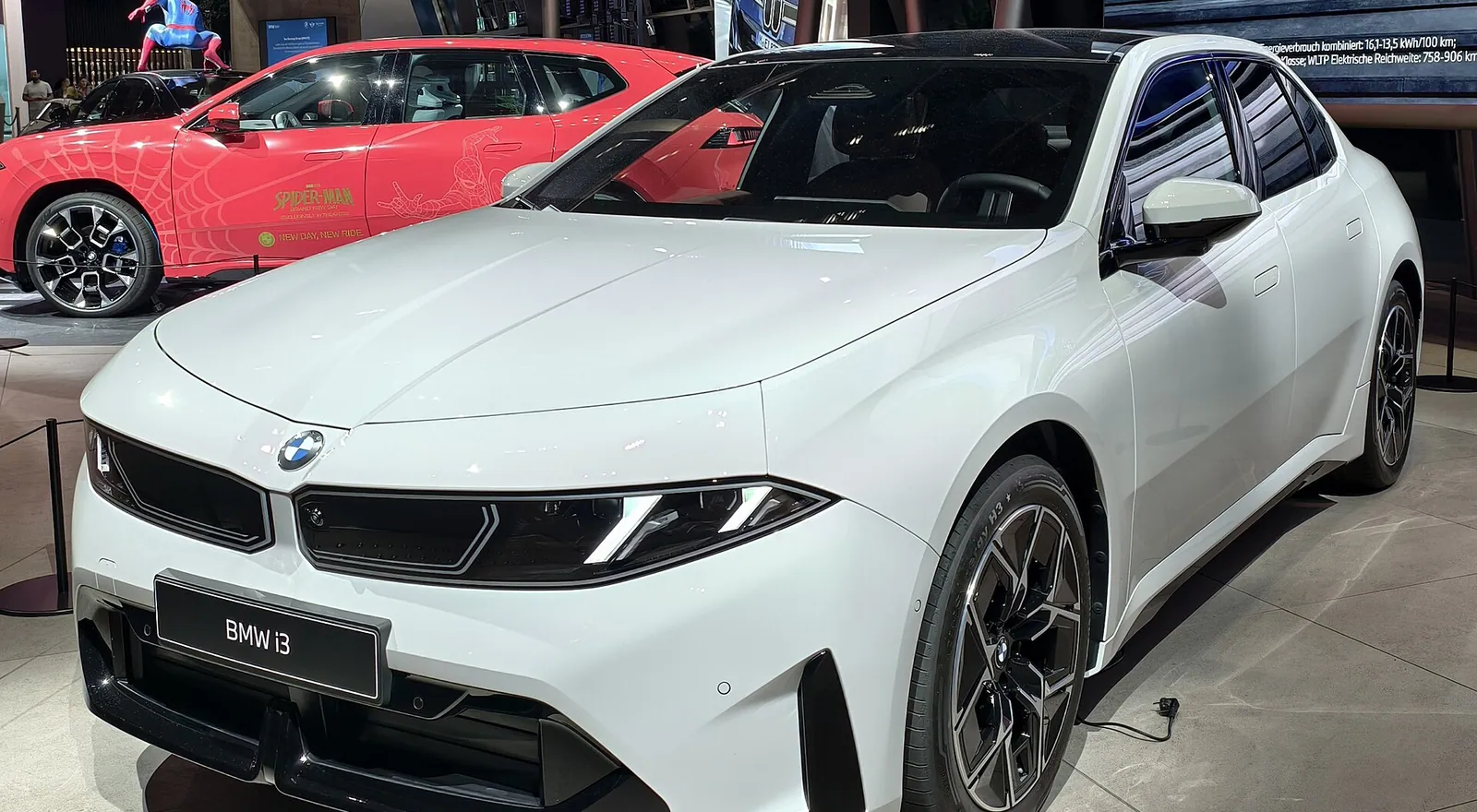
BMW's new i3 50 xDrive leads at up to 423 km, or 42 km for every minute plugged in. The two BMWs built on the same 400 kW hardware, the i3 50 and the iX3 50, sit in the same 21-minute 10–80% window, but the lower, sleeker sedan adds about 50 km more in the same 10 minutes. Charging hardware and times are the same, so the gap most likely comes down to the sedan's lower drag and weight.
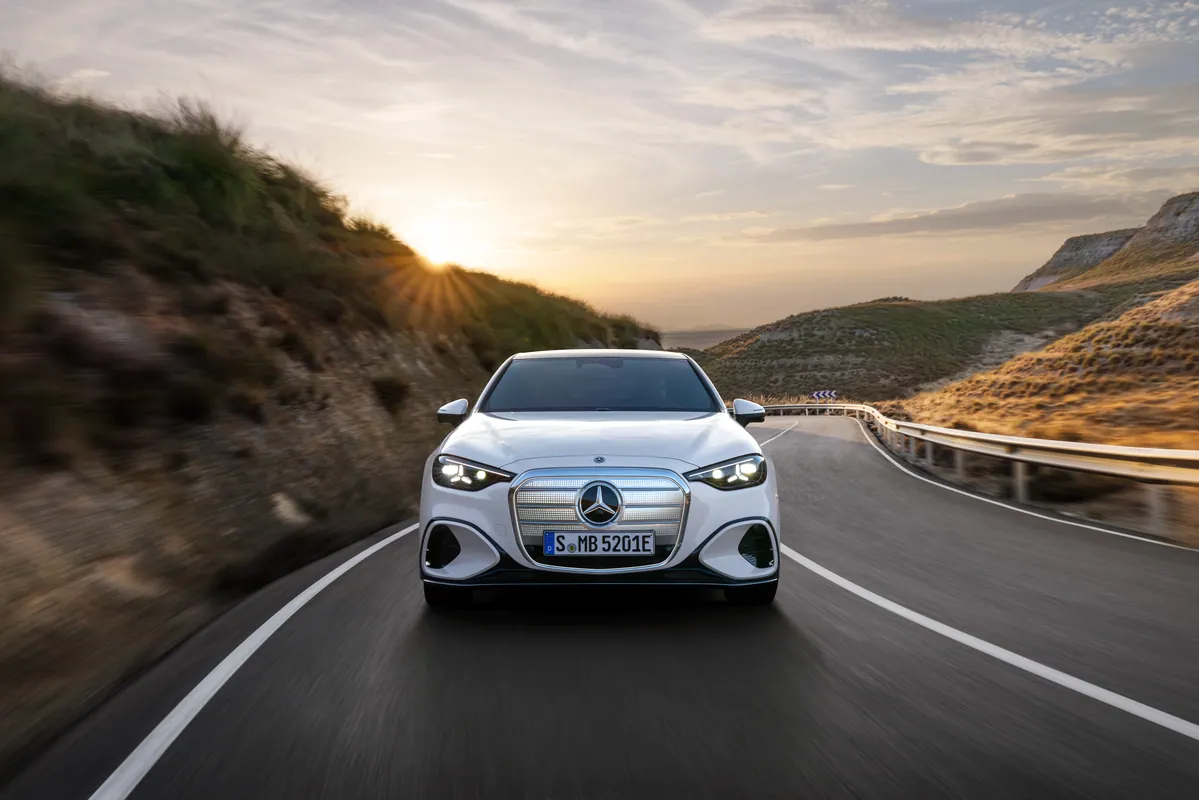
The Mercedes pair share a 94 kWh battery, 330 kW peak charging and a 22-minute 10–80% time, and again the sedan beats the SUV, by 20 km at the top of the band. Volvo gives a single "up to 315 km" figure for the EX60 and does not say which version it applies to, so we haven't calculated a share for it. Its 660 km maximum range is Volvo's preliminary figure for the P10 AWD, and the C 400's 762 km is from Mercedes-Benz's global launch release.
What the "10 minutes" figure assumes
BMW and Mercedes-Benz both say their figures are measured to ISO 12906 using the WLTP cycle. Read the footnotes and three conditions stand out:
- The charger must deliver the car's full power. Mercedes-Benz says its figure was determined "using the maximum DC charging power", and BMW says its figure requires the charging infrastructure to enable the maximum DC charging power. For the i3 50 and iX3 50 that means a 400 kW charger. On a less powerful unit, you will add fewer kilometres in the same time.
- The battery must be ready. State of charge and battery temperature both change the result. BMW notes the iX3 pre-conditions its battery when you navigate to a fast charger, and Volvo's EX60 page describes the same feature. Use it: a cold battery charges slowly.
- The kilometres are WLTP kilometres. The figure converts energy into distance using the car's official WLTP consumption, which blends city, suburban and highway driving. At a steady 110 km/h on a freeway, you will use more energy per kilometre, so the same 10 minutes buys less highway distance.
Volvo is the exception on charger power. It quotes the EX60's 10–80% times on a 150 kW charger: 26 minutes for the rear-drive P6 with its 83 kWh battery, and 28 minutes for the P10 AWD with 95 kWh. That is a more modest charger than the German figures assume, so the times are not directly comparable.
Peak power versus what you actually get
Peak charging power makes headlines, but a car only holds its peak for part of a session. A better guide is the average power across the whole 10–80% window, which you can work out from figures the makers publish: 70% of the battery's energy, divided by the 10–80% time.
| Car | Battery (maker figure) | Energy for 10–80% | 10–80% time | Average power (our estimate) | Quoted peak |
|---|---|---|---|---|---|
| BMW i3 50 xDrive | 108.7 kWh (net) | 76.1 kWh | 21 min | about 217 kW | 400 kW |
| BMW i3 40 xDrive | 82.8 kWh (net) | 58.0 kWh | 21 min | about 166 kW | 300 kW |
| Mercedes-Benz C 400 4MATIC electric | 94 kWh (usable) | 65.8 kWh | 22 min | about 179 kW | 330 kW |
| Mercedes-Benz GLC 400 4MATIC electric | 94 kWh (usable) | 65.8 kWh | 22 min | about 179 kW | 330 kW |
| Volvo EX60 | 95 kWh (listed) | 66.5 kWh | 28 min | about 142 kW | — |
On this measure the i3 50 xDrive averages roughly 217 kW, a little over half its 400 kW peak, while the Mercedes pair average about 179 kW against a 330 kW peak. The i3 40 xDrive takes the same 21 minutes with a smaller battery and a 300 kW peak, so it averages about 166 kW. The EX60 P10's estimate of about 142 kW is close to the 150 kW limit of the charger Volvo quotes, which suggests the charger, not the car, sets the pace in that figure. Volvo has not published a peak figure on its Australian page.
These are estimates. They ignore charging losses and assume the 10–80% time covers exactly 70% of the stated battery capacity. Volvo's 95 kWh figure is not labelled gross or net, so treat that row with extra caution.
What it means if you're buying
- Use the bottom of the band. If you are ordering big wheels or a well-equipped grade, the lower figure is the honest one. For the i3 50 xDrive that is 320 km, not 423 km.
- Match the car to your chargers. A 400 kW-capable car on a 50 kW charger is a 50 kW car. Check the rated output of the sites you will actually use on the EV Select charging map before paying for charging speed you can't access.
- Expect less at highway speed. Our highway range analysis shows how far below WLTP real cars fall at 120 km/h. The same discount applies to kilometres added at a charger.
- Think in stops, not percentages. On paper, every car here can add 300 km or more at the top of its band in about the time it takes to buy and drink a coffee, provided the charger and battery temperature cooperate. For most Australian road trips, that changes a long stop into a short one.
Our take
"Range added in 10 minutes" is the most useful charging number makers have given us so far, because it folds charging speed and efficiency into one figure drivers can use. It is also a best case. The BMW i3 50 xDrive sets the benchmark among cars coming to Australia, and the sedans beat their SUV siblings on every pairing we could compare. Before you treat any of these numbers as a promise, check the band for your specification and the power of the chargers on your regular routes.
Compare battery, charging and real-world highway results for every model in the EV Select database, including the new BMW i3 and Mercedes-Benz C-Class Electric entries.
- BMW Australia, BMW i3 Sedan (NA0)
- BMW Group, The new BMW 3 Series (press release, 30 September 2026)
- BMW Group, The new BMW 3 Series: technical data (September 2026)
- BMW Australia, BMW iX3 (NA5)
- Mercedes-Benz Australia, Electric C-Class: prices and specifications
- Mercedes-Benz Group, The all-new electric C-Class (press release, 20 April 2026)
- Mercedes-Benz Australia, GLC Electric: prices and specifications
- Volvo Car Australia, Volvo EX60