
As of November 2026, a short list of battery-electric cars is sold new in Australia with seven or more seats. This guide covers only those all-electric models we could confirm on the manufacturer’s Australian site, plus official ANCAP ratings and Green Vehicle Guide energy-use figures where they exist. Plug-in hybrids are out of scope. The Tesla Model Y L is sold here with six seats, not seven, and is treated as an alternative rather than a seven-seater.
This is a specifications comparison from manufacturer publications, ANCAP and the Green Vehicle Guide, not a road test. EV Select has not driven these cars for this guide, and there are no scores or driving impressions here. “Best for” labels below follow only from the cited official figures, such as the longest published WLTP range, the highest confirmed braked towing capacity, or the lowest drive-away price among those we could price in Victoria.
EV Select already has a broader family electric SUV shortlist, which mixes five-seaters with the Kia EV9, Hyundai Ioniq 9 and the six-seat Model Y L. This article is the dedicated seven-seat battery-electric round-up, not a republishing of that list. For the six-seat Tesla, see our Model Y L buyer’s guide and six-seater explainer. Highway results, where they exist, are in our independent highway-range guide.
Which seven-seat EVs are sold in Australia right now?
These are the battery-electric models we could confirm, as of November 2026, on an official Australian manufacturer site as having a seven-seat configuration sold new here.
On official WLTP figures alone, the longest claimed range in this list is the Zeekr 009 7-Seat FWD at 604 km, just ahead of the Ioniq 9 at up to 600 km. The highest confirmed braked towing capacity is 2,500 kg on the AWD Kia EV9 Earth and GT-Line. Among the seven-seaters that have an ANCAP rating that applies to them, the Volvo EX90 has the highest published scores. Among the drive-away figures we could price — Victorian postcode-3000 estimates where a postcode was required, plus Volkswagen’s national campaign drive-away — the lowest is the Mercedes-Benz GLB 250+, at an Estimated Drive Away Price of A$81,423.05, then the ID. Buzz Pro LWB from $84,990 drive-away under a timed national campaign. Those two figures are both drive-away, but they are not on identical terms (see the price section). Mercedes describes the electric GLB as having “a third row for up to seven occupants”; official third-row dimensions were not published on the pages we verified, so check that the space suits you.
| Model | Body | Official seven-seat range (as published) | Battery | Peak DC / 10–80% (if published) | Braked towing (if published) | ANCAP |
|---|---|---|---|---|---|---|
| Kia EV9 Air (RWD) | Large SUV | 443 km WLTP | 76.1 kWh | Approx. 20 min on a 350 kW charger | 900 kg | 5 stars, 2023, all variants |
| Kia EV9 Earth (AWD) | Large SUV | 512 km WLTP | 99.8 kWh | Approx. 24 min on a 350 kW charger | 2,500 kg | Same rating |
| Kia EV9 GT-Line (AWD) | Large SUV | 505 km WLTP | 99.8 kWh | Approx. 24 min on a 350 kW charger | 2,500 kg | Same rating |
| Hyundai Ioniq 9 | Large SUV | Up to 600 km WLTP | 110.3 kWh | About 24 min on a 350 kW charger. No peak DC rate in kW on Hyundai’s AU pages | Not published on the Hyundai AU pages we verified | 5 stars, 2025, six- and seven-seat variants |
| Volvo EX90 Single Motor | Large SUV | Up to 479 km WLTP | 92 kWh (nominal) | 24 min at 300 kW DC | 1,500 kg | 5 stars, 2025, all variants |
| Volvo EX90 Twin Motor Performance | Large SUV | Up to 521 km WLTP | 106 kWh (nominal) | 24 min at 300 kW DC | 2,200 kg | Same rating |
| Mercedes-Benz GLB 250+ / GLB 350 4MATIC Electric | SUV, third row for up to seven | Total WLTP range not published in Mercedes-Benz Australia’s official “All technical data” table | 85 kWh usable | 22 min; max 320 kW DC | Not published in that table | Not verified this research |
| Volkswagen ID. Buzz Pro LWB | People mover | Official model page states a 422–452 km range; FAQ says up to 450 km WLTP | Not published on the current AU model page we verified | Official page: 10–80% in 26 min (DC) | Not published on that page | The 2022 rating applies to short-wheelbase five-seat variants only; LWB seven-seat is unrated |
| Zeekr 009 7-Seat FWD | People mover | 604 km WLTP | 116 kWh | 30 min at 150 kW DC | Not published on the official AU page we verified | No ANCAP rating found |
| Zeekr 009 7-Seat AWD | People mover | 582 km WLTP | 116 kWh | 30 min at 150 kW DC | Not published on that page | No ANCAP rating found |
| Denza D9 FWD | People mover | 520 km WLTC / 600 km NEDC (not WLTP) | 103.36 kWh Blade | Peak 200 kW DC; no 10–80% time in the official spec sheet | Not published in that sheet | No ANCAP rating found |
| Denza D9 AWD | People mover | 480 km WLTC / 580 km NEDC (not WLTP) | 103.36 kWh Blade | Peak 200 kW DC | Not published in that sheet | No ANCAP rating found |
You can also compare these models in the EV Select database, which includes independent highway-test results where they match an Australian variant: Kia EV9, Hyundai Ioniq 9, Volvo EX90, Mercedes-Benz GLB, Volkswagen ID. Buzz, Zeekr 009 and Denza D9. Those listings are a snapshot of the database and are not a substitute for the official manufacturer figures cited below.
How much do they cost?
Official Australian prices below were read from the manufacturers’ own sites in a browser on 13 November 2026 at about 9:10–9:16pm AEDT. Where a postcode was required, it was 3000 (Melbourne, VIC). List or shown prices and drive-away figures are in separate columns and are not like-for-like. Do not subtract one from the other, and do not rank a list price, an unlabelled configurator price, or a campaign drive-away as if they were the same kind of figure.
| Model | Official list or shown price (as labelled by the maker) | Official drive-away (as labelled by the maker) |
|---|---|---|
| Kia EV9 Air | RRP $97,000, as shown on Kia’s build-and-price | Drive Away Estimate $106,404.75, VIC 3000 |
| Kia EV9 Earth | RRP not shown on that page | Drive Away Estimate $119,273.45, VIC 3000 |
| Kia EV9 GT-Line | RRP not shown on that page | Drive Away Estimate $138,915.15, VIC 3000 |
| Kia EV9 GT (six-seat, not a seven-seater) | RRP not shown on that page | Drive Away Estimate $150,090.60, VIC 3000 |
| Hyundai Ioniq 9 Calligraphy 7-seat AWD (314 kW) | List price not shown in the calculator | Estimated Drive Away $128,462.61, Melbourne VIC 3000, via Melbourne City Hyundai |
| Hyundai Ioniq 9 Calligraphy 6-seat AWD (six-seat, not a seven-seater) | List price not shown in the calculator | Estimated Drive Away $130,546.60, Melbourne VIC 3000, via Melbourne City Hyundai |
| Volvo EX90 Plus Single Motor RWD | Manufacturer’s Recommended List Price $103,453 incl GST | Manufacturer’s Recommended Drive Away Price $120,665, Melbourne VIC 3000 |
| Volvo EX90 Ultra Twin Motor Performance AWD | Manufacturer’s Recommended List Price $124,991 | Manufacturer’s Recommended Drive Away Price $149,841, Melbourne VIC 3000 |
| Mercedes-Benz GLB 250+ | List price not shown on the configurator readout | Estimated Drive Away Price A$81,423.05, incl. GST, LCT, stamp duty, rego and CTP, postcode 3000 |
| Mercedes-Benz GLB 350 4MATIC | List price not shown on the configurator readout | Estimated Drive Away Price A$93,103.55, incl. GST, LCT, stamp duty, rego and CTP, postcode 3000 |
| Volkswagen ID. Buzz Pro LWB | Not advertised as a list price | From $84,990 manufacturer’s recommended campaign drive-away, published nationally (see conditions below) |
| Zeekr 009 7 Seater FWD | $115,900 — price shown in Zeekr’s online configurator; not stated as drive-away | Not stated as drive-away |
| Zeekr 009 7 Seater AWD | $135,900 — price shown in Zeekr’s online configurator; not stated as drive-away | Not stated as drive-away |
| Zeekr 009 6 Seater AWD (six-seat, not a seven-seater) | $139,900 — price shown in Zeekr’s online configurator; not stated as drive-away | Not stated as drive-away |
| Denza D9 (FWD and AWD) | No price was shown on Denza’s official Australian site | No price was shown on Denza’s official Australian site |
Among the drive-away figures we could price, the lowest is the Mercedes-Benz GLB 250+, at an Estimated Drive Away Price of A$81,423.05 (incl. GST, LCT, stamp duty, rego and CTP, postcode 3000). Next is the Volkswagen ID. Buzz Pro LWB, from $84,990 drive-away. That Volkswagen figure is the manufacturer’s recommended campaign drive-away for new and demonstrator MY26 ID. Buzz LWB vehicles purchased from 1 October 2026 and delivered by 31 December 2026, for private buyers only. Government, fleet and rental buyers and other offers are excluded. Options and metallic paint may cost extra, and the offer is while stocks last. Volkswagen Group Australia reserves the right to extend, withdraw or change the offer. The terms do not tie the price to a state or postcode, so it is a national recommended campaign drive-away, not a Victorian postcode-3000 estimate. The short-wheelbase ID. Buzz, from $79,990 drive-away under the same campaign window, is a five-seater and is not a seven-seat alternative.
Zeekr’s configurator prices are not part of that drive-away ranking, because they are not stated as drive-away. Denza published no official price. Other states, options, dealer delivery and a change of postcode can produce different totals, so use the manufacturer’s own tool for a current quote where you live.
Kia EV9
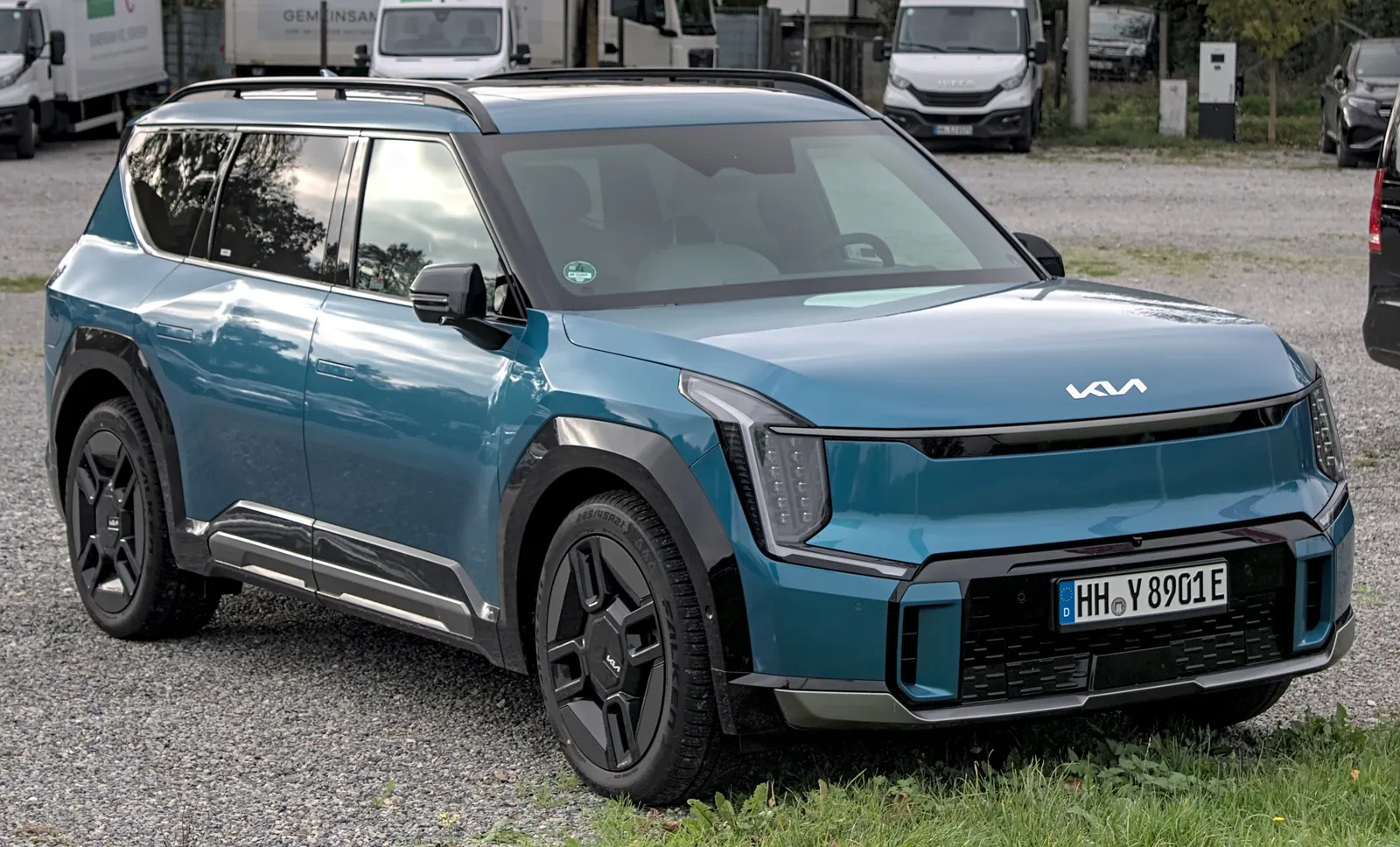
The EV9 is Kia Australia’s flagship all-electric seven-seat SUV. The official product page and the Australian brochure describe three seven-seat grades — Air (rear-wheel drive), Earth and GT-Line (both dual-motor all-wheel drive) — and a separate GT grade that has six seats, with second-row captain’s chairs. The GT is not treated here as a seven-seater.
On Kia’s official build-and-price page, the Drive Away Estimate for Victoria, postcode 3000, is $106,404.75 for the Air (with an RRP of $97,000 shown), $119,273.45 for the Earth, $138,915.15 for the GT-Line, and $150,090.60 for the six-seat GT. RRPs for Earth, GT-Line and GT were not shown on that readout.
From Kia’s Australian brochure and product page: the Air uses a 76.1 kWh battery and is rated at 443 km WLTP, with 160 kW and 350 Nm. Earth and GT-Line use a 99.8 kWh battery and are rated at 512 km and 505 km WLTP respectively. The official product page quotes Earth at 283 kW and 700 Nm; the Australian brochure lists a combined system output of 282.6 kW and 700 Nm for the non-GT all-wheel-drive grades. The on-board charger is rated at 7 kW on single-phase and 10.5 kW on three-phase. AC charging is Type 2; DC is CCS Type 2. With an 11 kW charger, Kia quotes a 10–100% AC time of about seven hours on the Air and about nine hours five minutes on the larger battery (230 V / 48 A). A 10–80% DC charge is quoted at about 20 minutes for the Air and about 24 minutes for the AWD grades on a 350 kW charger, or about 63 and 83 minutes on a 50 kW charger. Kia notes that charging times are based on its headquarters testing and that actual times depend on conditions. Interior vehicle-to-load is standard; an exterior V2L adaptor is listed on GT-Line (and on the six-seat GT), not on Air or Earth.
With seven seats in use, Kia quotes 333 litres (VDA) of rear cargo; 828 litres with five seats up and up to 2,318 litres (2,393 litres on the six-seat GT) with two seats up. The brochure also lists a front cargo (frunk) volume of 90 litres / 40 kg, with 52 litres / 20 kg shown in the GT column. Overall length is 5,010 mm (5,015 mm on GT), width 1,980 mm, wheelbase 3,100 mm. Official kerb weights are 2,312 kg (Air), 2,552 kg (Earth) and 2,636 kg (GT-Line). Braked towing is 900 kg on the Air and 2,500 kg on the AWD grades (unbraked 450 kg and 750 kg).
ANCAP rates all EV9 variants five stars, with a 2023 date stamp, tested in 2023 and expiring in December 2031. Scores are 84% adult occupant protection, 87% child occupant, 76% vulnerable road user and 85% safety assist. ANCAP’s December 2023 media release, “Kia, Mercedes-Benz and BMW each achieve five stars,” announced that result. The Green Vehicle Guide’s 2023 EV9 rows match Kia’s WLTP ranges and list energy use of 195 Wh/km (Air), 223 Wh/km (Earth, 19-inch), 228 Wh/km (GT-Line) and 231 Wh/km (Earth, 20-inch; 492 km in the Guide’s range column).
Kia Australia states a seven-year, unlimited-kilometre new-vehicle warranty, with a footnote that the kilometre term differs for Kia EV models and that terms apply. On its seven- and eight-seater page it also states a seven-year or 150,000 km warranty, whichever comes first, for high-voltage electrical vehicle system components, including the high-voltage battery. Kia says seven-year capped-price servicing is not active on EV models.
Who it suits. The EV9 is the seven-seat SUV to look at first if you want a full-size three-row body, a published 2,500 kg braked towing rating (on Earth and GT-Line) and an ANCAP rating that applies to every grade. Choose the Air only if you can live with 443 km of official WLTP range and a 900 kg braked tow limit. The GT is the wrong grade if you need a seventh seat.
Hyundai Ioniq 9
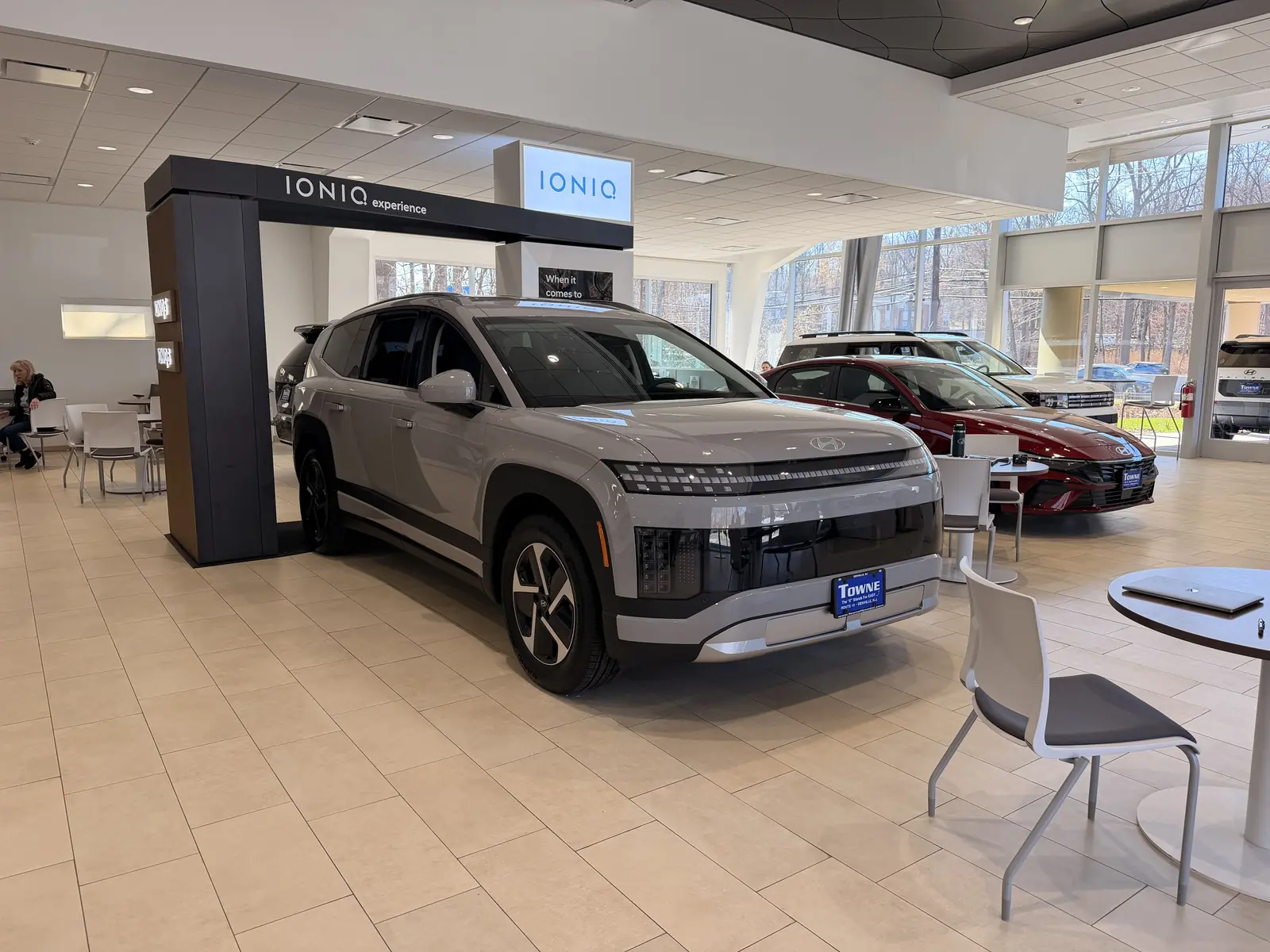
Hyundai Australia calls the Ioniq 9 its first three-row electric SUV and sells it as a six- or seven-seater. The six-seat layout uses second-row captain’s chairs with electric adjustment and integrated leg rests. Relaxation seats in the second row are described as six-seat only. The seven-seat layout is the one that belongs on this list.
Hyundai’s official calculator listed only Calligraphy variants when it was read on 13 November 2026. That is not a statement that other grades do or do not exist in the Australian range; they were simply not listed in the calculator. The Calligraphy 7-seat AWD (314 kW) had an Estimated Drive Away of $128,462.61, and the Calligraphy 6-seat AWD an Estimated Drive Away of $130,546.60, both for Melbourne, VIC, postcode 3000, via Melbourne City Hyundai. A list price was not shown in the calculator.
On Hyundai’s official Ioniq 9 pages, maximum range is 600 km WLTP from a 110.3 kWh battery. A 10–80% charge is quoted at approximately 24 minutes on a compatible 350 kW public DC charger. Hyundai does not publish a peak DC charging rate in kilowatts on those pages, and towing is not shown. Official dimensions are 5,060 mm long, 1,980 mm wide and 1,790 mm high, on a 3,130 mm wheelbase — Hyundai says that is the longest wheelbase of any Hyundai passenger vehicle. Cargo is quoted at 338 litres (VDA) with the third row in use, 908 litres with the third row folded and 2,419 litres with the second row folded, plus a 52-litre front cargo area. The official pages we opened do not set out every Australian powertrain in a single specification table, so those items are omitted rather than taken from a global press release.
ANCAP rates six- and seven-seat Ioniq 9s five stars, with a 2025 date stamp, tested in 2025 and expiring in December 2031. The rating is based on testing of the Ioniq 9 and the closely related EV9, with technical information showing that some EV9 results also apply. Scores are 84% adult occupant, 86% child occupant, 77% vulnerable road user and 85% safety assist. ANCAP’s media release is titled “Five stars not a bar too high for Hyundai IONIQ 9.”
For vehicles first registered from 1 June 2025, Hyundai offers a seven-year unlimited-kilometre warranty when all scheduled services are completed at an authorised Hyundai dealer; otherwise the standard five-year unlimited-kilometre warranty applies. Hybrid and EV drive batteries are warranted for eight years or 160,000 km, whichever comes first. New Hyundai battery-electric vehicles include 24 months of Premium Roadside Support, extended at scheduled Hyundai services. Terms apply.
Who it suits. On official WLTP figures, the Ioniq 9 is the long-range large SUV in this group (up to 600 km), a whisker behind only the Zeekr 009 FWD people mover. It also offers a genuine six-seat lounge layout if you do not need a seventh belt. Confirm towing with Hyundai, because it was not shown on the official pages or in the calculator.
Volvo EX90
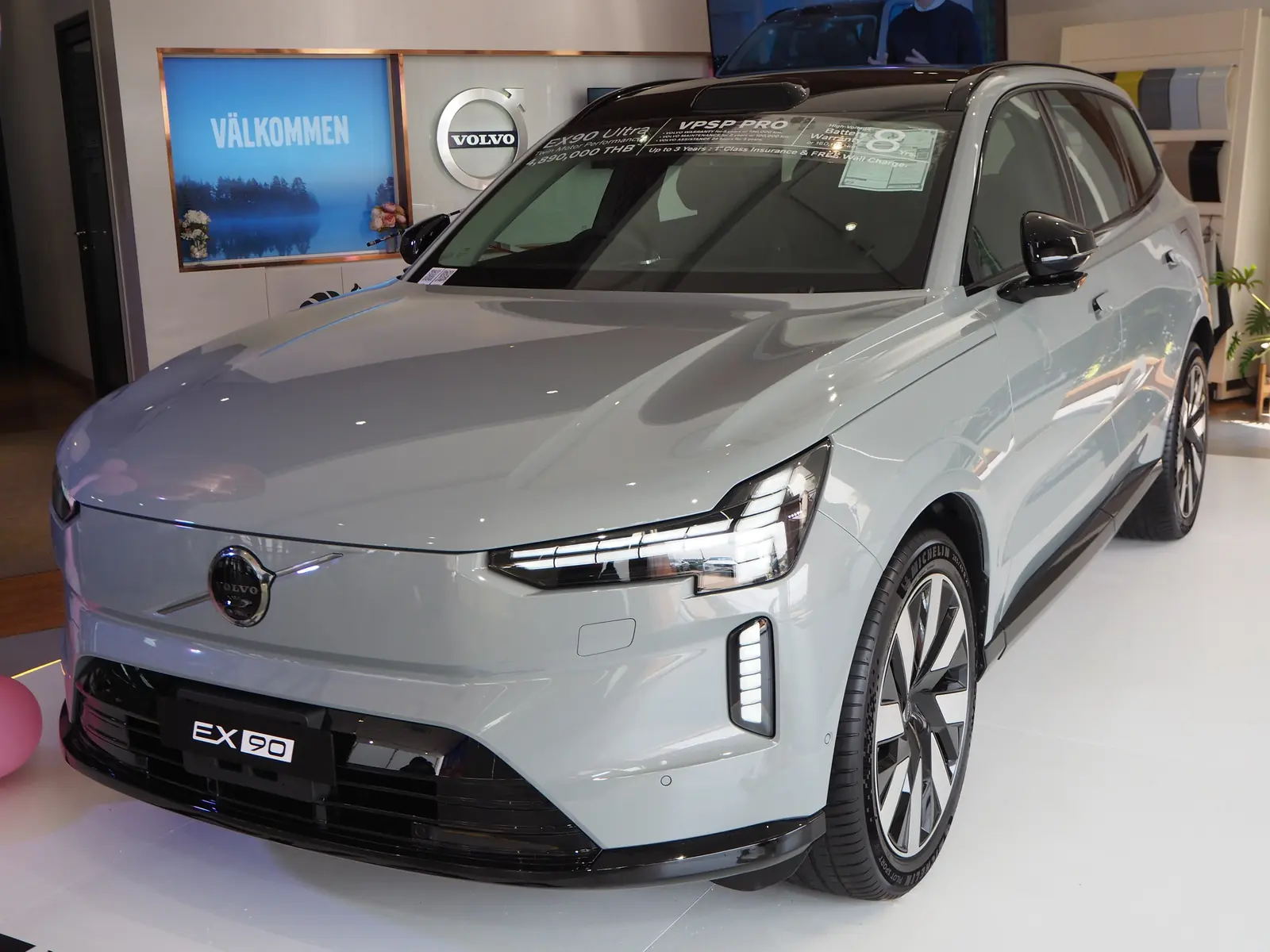
Volvo Australia lists the EX90 as a large, fully electric seven-seater for model year 2027, in Plus and Ultra equipment levels, with Single Motor (rear-wheel drive) and Twin Motor Performance powertrains. Official specifications quote seven seats on both powertrains.
On Volvo’s official build page, the Plus Single Motor RWD has a Manufacturer’s Recommended List Price of $103,453 incl GST and a Manufacturer’s Recommended Drive Away Price of $120,665, Melbourne VIC 3000. The Ultra Twin Motor Performance AWD has a Manufacturer’s Recommended List Price of $124,991 and a Manufacturer’s Recommended Drive Away Price of $149,841, Melbourne VIC 3000.
The Single Motor is rated at up to 479 km WLTP, 92 kWh nominal battery capacity, 245 kW and 480 Nm, 6.8 s 0–100 km/h, and a 1,500 kg trailer maximum. The Twin Motor Performance is rated at up to 521 km WLTP, 106 kWh nominal, 500 kW and 870 Nm, 4.2 s 0–100 km/h, and a 2,200 kg trailer maximum. Both are 800 V systems. Volvo quotes a 10–80% charge in 24 minutes at a 300 kW DC station, an 11 kW on-board charger, and up to 170 km of range from a ten-minute top-up. With seven seats, cargo is 384 litres with all rear backrests raised, plus 72 litres under the floor; the maximum with seats folded is 2,135 litres. Running-order mass is 2,585 kg (Single Motor) and 2,765 kg (Twin Motor Performance). Some range, charging and power figures on Volvo’s Australian pages are still footnoted as preliminary, “not guaranteed,” and “vehicle certification pending.” Treat them as Volvo’s published estimates, and confirm the certified figures with a retailer.
ANCAP rates all EX90 variants five stars, with a 2025 date stamp, tested in 2025 and expiring in December 2031. Scores are 92% adult occupant, 94% child occupant, 82% vulnerable road user and 84% safety assist — the highest published ANCAP scores among the seven-seaters in this guide that have a rating. The Green Vehicle Guide lists a 2026 EX90 Single Motor at 216 Wh/km and 479 km, on the WLTP (4-phase) test cycle.
Who it suits. The EX90 is the one to shortlist if official safety scores, a 2,200 kg braked trailer rating on the Performance powertrain, and a 384-litre official boot with all seven seats in use are high on your list. Confirm the status of Volvo’s “certification pending” footnotes before you order.
Mercedes-Benz GLB Electric
Mercedes-Benz Australia’s official electric GLB page describes “a third row for up to seven occupants” and lists both the GLB 250+ and the GLB 350 4MATIC as seven-seat, five-door cars. Official technical data, including the “All technical data (Electric)” table on that page (re-read on 13 November 2026): 85 kWh usable battery on both; 200 kW (250+) or 260 kW (350 4MATIC); 11 kW AC; 320 kW maximum DC; 10–80% in 22 minutes; nine hours AC 0–100%; and 127 litres of front cargo (frunk). After ten minutes of DC charging, Mercedes quotes 225–260 km (250+) or 215–255 km (350 4MATIC) of WLTP range added. A total WLTP driving-range figure and a braked towing rating are still not in that official table, so they are omitted.
On Mercedes-Benz Australia’s configurator, the Estimated Drive Away Price, incl. GST, LCT, stamp duty, rego and CTP, for postcode 3000, is A$81,423.05 for the GLB 250+ and A$93,103.55 for the GLB 350 4MATIC. That GLB 250+ figure is the lowest drive-away among the seven-seaters we could price, on the terms set out in the price section. Official third-row dimensions were not published on the pages we verified; Mercedes’ wording is “a third row for up to seven occupants,” so check that the space suits the people who would use it.
The EQB and EQS SUV are not listed as current models on mercedes-benz.com.au, and they are not in this confirmed list.
Who it suits. The electric GLB is the Mercedes to consider if you want a seven-seat layout, a published 320 kW DC peak with a 22-minute 10–80% time, and the lowest of the drive-away figures in this guide. You will need to get a total range and a towing figure from Mercedes or a dealer, and you should check the third row in person.
Volkswagen ID. Buzz (long-wheelbase)
Volkswagen Australia sells the ID. Buzz as a five-seater (short wheelbase) or a seven-seater (long wheelbase). Only the LWB belongs on this list. The official model page quotes seats for “5 & 7,” luggage capacity of up to 2,469 litres, a range of 422–452 km, and a DC 10–80% charge in 26 minutes. The same site’s FAQ says a WLTP-tested range of up to 450 km, and that a 10–80% charge takes around 30 minutes, with times that may vary. This guide uses the 26-minute figure from the model page and notes that variation. A battery capacity in kilowatt-hours and a towing rating were not on the current official pages we verified.
The seven-seat LWB is advertised from $84,990 drive-away as a MY26 national campaign price, with the conditions set out in the price section above. Volkswagen Australia states a five-year unlimited-kilometre vehicle warranty and an eight-year battery warranty, with terms on its warranty page.
ANCAP has a 2022 five-star-protocol rating for the ID. Buzz, but it applies only to short-wheelbase five-seat variants. The official page says other variants, including the long-wheelbase seven-seater, are unrated. Do not read the 92/89/60/81 scores across to the seven-seat LWB.
Who it suits. The ID. Buzz LWB is the people-mover alternative to the large SUVs, and it has the second-lowest drive-away figure in this guide — a national campaign price with a delivery deadline of 31 December 2026, not an open-ended list price. If ANCAP coverage of the exact seven-seat body matters to you, this is the gap to know about.
Zeekr 009
Zeekr Australia’s official 009 page lists three configurations: 7-Seat FWD, 7-Seat AWD and 6-Seat AWD. The seven-seat models use a 2+2+3 layout with a walk-through aisle. The six-seat model is a 2+2+2 layout with first-class second-row seats and is not a seven-seater.
The prices shown in Zeekr’s online configurator are $115,900 for the 7 Seater FWD, $135,900 for the 7 Seater AWD, and $139,900 for the 6 Seater AWD. The page does not label these prices, so they are presented here as the price shown in Zeekr’s online configurator; not stated as drive-away. They are not included in the drive-away ranking.
Official figures: 116 kWh battery; 604 km WLTP (FWD) or 582 km WLTP (AWD); 250 kW single motor (FWD) or 450 kW dual motor (AWD); 0–100 km/h in 7.9 s (FWD) or 4.5 s (AWD); 10–80% in 30 minutes at 150 kW DC. Overall size is 5,209 mm long, 2,024 mm wide and 1,812 mm high, on a 3,205 mm wheelbase. No official AU towing figure, boot volume or ANCAP rating was published on the official page we opened, and ANCAP’s search returned no 009 rating.
Who it suits. On official WLTP numbers, the 7-Seat FWD has the longest claimed range in this guide, at 604 km. It is a large luxury people mover, not a seven-seat SUV. Confirm whether you need the seventh seat, because the 6 Seater AWD is a different layout and shows a higher configurator price.
Denza D9
Denza Australia lists the D9 as an all-electric luxury people mover with seven-seat comfort and a 2+2+3 layout. The official MY26 Australian specification sheet (dated 21 September 2026) gives two grades, FWD and AWD, on the same 103.36 kWh BYD Blade battery.
No price was shown on Denza’s official Australian site when it was checked for this guide, including the product page and the official specification sheet. This guide does not fill that gap from a third-party pricelist.
FWD: 230 kW and 360 Nm, 9.5 s 0–100 km/h, 520 km WLTC and 600 km NEDC. AWD: 275 kW and 470 Nm, 6.9 s, 480 km WLTC and 580 km NEDC. Those range figures are not WLTP and should not be compared directly with the WLTP numbers for the Kia, Hyundai, Volvo or Zeekr. AC charging is Type 2 at 11 kW; DC is CCS2 at 200 kW. No 10–80% time is printed in the sheet. Vehicle-to-load is listed at 6.6 kW. Dimensions are 5,250 mm long, 1,960 mm wide and 1,920 mm high, on a 3,110 mm wheelbase. Minimum boot capacity is 410 litres and maximum 2,310 litres. Kerb weights are 2,764 kg (FWD) and 2,865 kg (AWD). A braked towing figure, a warranty term and an ANCAP rating were not in the official sheet or on the product page we opened, and no ANCAP listing was found.
Who it suits. The D9 is a long, seven-seat people mover with a published 410-litre minimum boot — the largest third-row-up volume among the figures we could cite, though makers do not all use the same measurement method. Judge range on the WLTC (or NEDC) figures Denza actually publishes, not against a WLTP table, and get a current price from Denza or a dealer, because the official site did not show one.
What about six-seaters, and cars that did not make this list?
The Tesla Model Y L is sold in Australia with six seats and a 681 km official WLTP range. It is a three-row car, but it is not a seven-seater. See our Model Y L guide. The Kia EV9 GT (Drive Away Estimate $150,090.60, VIC 3000), the Ioniq 9 Calligraphy 6-seat AWD (Estimated Drive Away $130,546.60, Melbourne VIC 3000, via Melbourne City Hyundai) and the Zeekr 009 6 Seater AWD ($139,900 shown in Zeekr’s online configurator; not stated as drive-away) are likewise six-seat options in otherwise seven-seat families.
Several popular “plug-in” seven-seaters are plug-in hybrids, not battery-electric cars, including the BYD Sealion 8 and the GAC M8 as sold in Australia. They are outside this list.
We also checked, and did not include, models we could not confirm as a current new seven-seat BEV on an official Australian manufacturer site: the BYD Tang (not on BYD Australia’s current model range), the LDV Mifa 9 (not on LDV Australia’s current official range page), the LDV Mifa 7 (reported as under evaluation, not as on sale), the Xpeng G9 (a five-seat SUV), Leapmotor, the Rivian R1S, and the HQ E-HS9 (EV Select has a launch preview, not a confirmation it is sold new today). The Mercedes-Benz EQB and EQS SUV are not listed as current models on mercedes-benz.com.au.
Which seven-seat EV has the most range?
On official WLTP figures, the Zeekr 009 7-Seat FWD is ahead, at 604 km, then the Hyundai Ioniq 9 at up to 600 km, the Zeekr 009 AWD at 582 km, the Volvo EX90 Twin Motor Performance at up to 521 km, and the Kia EV9 Earth at 512 km. The EV9 Air is the shortest official WLTP range among the SUVs, at 443 km. The ID. Buzz official page gives a 422–452 km band (FAQ: up to 450 km WLTP). The Denza D9’s 600 km / 580 km figures are NEDC, with WLTC at 520 km / 480 km, so they sit on a different test cycle. Mercedes-Benz Australia’s official “All technical data” table for the electric GLB still does not publish a total WLTP driving range. Official test-cycle range is not a highway result; see our highway-range guide for independent tests, including an EX90 result discussed there.
Can a seven-seat EV tow?
Yes, where the manufacturer publishes a rating. The highest confirmed braked figure in this guide is 2,500 kg on the Kia EV9 Earth and GT-Line (900 kg on the Air). Volvo publishes 2,200 kg for the EX90 Twin Motor Performance and 1,500 kg for the Single Motor. We did not find a published braked towing figure on the official Australian Ioniq 9, ID. Buzz, Zeekr 009 or Denza D9 pages we verified, or in Mercedes-Benz Australia’s official “All technical data” table for the electric GLB. Towing reduces range; stay within the vehicle’s rating and the towbar’s limits, and confirm the figure for your exact grade.
What is the cheapest seven-seat EV in Australia?
We still cannot name a cheapest list price across the class, because several makers did not show a list price, Zeekr’s configurator prices are unlabelled, and Denza showed no official price at all.
Among the drive-away figures we could price, the lowest is the Mercedes-Benz GLB 250+ at an Estimated Drive Away Price of A$81,423.05 (incl. GST, LCT, stamp duty, rego and CTP, postcode 3000), then the Volkswagen ID. Buzz Pro LWB from $84,990 as a national manufacturer’s recommended campaign drive-away (purchase from 1 October 2026, delivery by 31 December 2026, private buyers, other conditions as above). Those two are both drive-away, but one is a Victorian postcode estimate and the other is a national campaign price. They should not be compared with Kia, Hyundai or Volvo list prices, or with Zeekr’s unlabelled configurator prices. Check each manufacturer’s site for a current figure in your state.
Frequently asked questions
Is the Tesla Model Y L a seven-seater?
No. Tesla Australia sells the Model Y L with six seats. It is a useful three-row alternative if you do not need a seventh official seating position, and it has a longer official WLTP range (681 km) than any seven-seater in this guide.
Do any of these cars have eight seats?
Not among the battery-electric models confirmed on official Australian manufacturer sites for this guide.
Which one has the best ANCAP rating?
Among seven-seaters whose ANCAP rating applies to the car you would actually buy, the Volvo EX90 has the highest published scores (92/94/82/84, five stars, 2025). The EV9 (five stars, 2023) and Ioniq 9 (five stars, 2025) are close to each other. The ID. Buzz rating does not apply to the long-wheelbase seven-seater. We found no ANCAP rating for the Zeekr 009 or the Denza D9.
Will a seventh seat leave enough boot space?
Official third-row-up volumes vary, and they are not all measured the same way: Denza quotes a 410-litre minimum boot, Volvo 384 litres plus 72 litres under the floor, Hyundai 338 litres (VDA), and Kia 333 litres (VDA). Those numbers are with the third row in use. Folding seats increases capacity substantially on every model that publishes a folded figure. Mercedes-Benz Australia does not publish a third-row cargo or dimension figure on the electric GLB pages we verified, so check the third-row space in that car if it is on your shortlist.
Are prices and offers still current next month?
They may not be. The figures in the price table were read from official sites on 13 November 2026 (about 9:10–9:16pm AEDT), using postcode 3000 where a postcode was required. Volkswagen’s ID. Buzz campaign drive-away is tied to purchase and delivery dates ending 31 December 2026. Other makers’ list prices, estimates and offers can change without a seasonal campaign. Use the manufacturer sites for a current quote.
This is general information, not purchase or finance advice. Confirm prices, specifications and availability with the manufacturer or your dealer.
Sources
Prices, specifications, towing figures and campaign terms are from manufacturer Australian websites, configurators and brochures checked on 13 November 2026 (about 9:10–9:16pm AEDT), using postcode 3000 where a postcode was required. ANCAP ratings and Green Vehicle Guide energy-use figures are from those official registers. Independent highway tests are not tabulated here; they are discussed in our highway-range guide. This is general information, not purchase or finance advice.
- Kia Australia, EV9: features, brochure (PDF), build and price, warranty; ANCAP: EV9
- Hyundai Australia, Ioniq 9: product page, price calculator; ANCAP: Ioniq 9
- Volvo Cars Australia, EX90: product page, specifications, build; ANCAP: EX90
- Mercedes-Benz Australia, GLB Electric: overview and configurator
- Volkswagen Australia, ID. Buzz: model page, EV range; ANCAP: ID. Buzz (does not apply to the long-wheelbase seven-seater)
- Zeekr Australia, 009: model page and configurator
- Denza Australia, D9: product page and specification sheet (PDF)
- Green Vehicle Guide: https://greenvehicleguide.gov.au/
- EV Select: family electric SUV shortlist, Model Y L buyer’s guide, Model Y L six-seater explainer, independent highway-range guide, EV database