
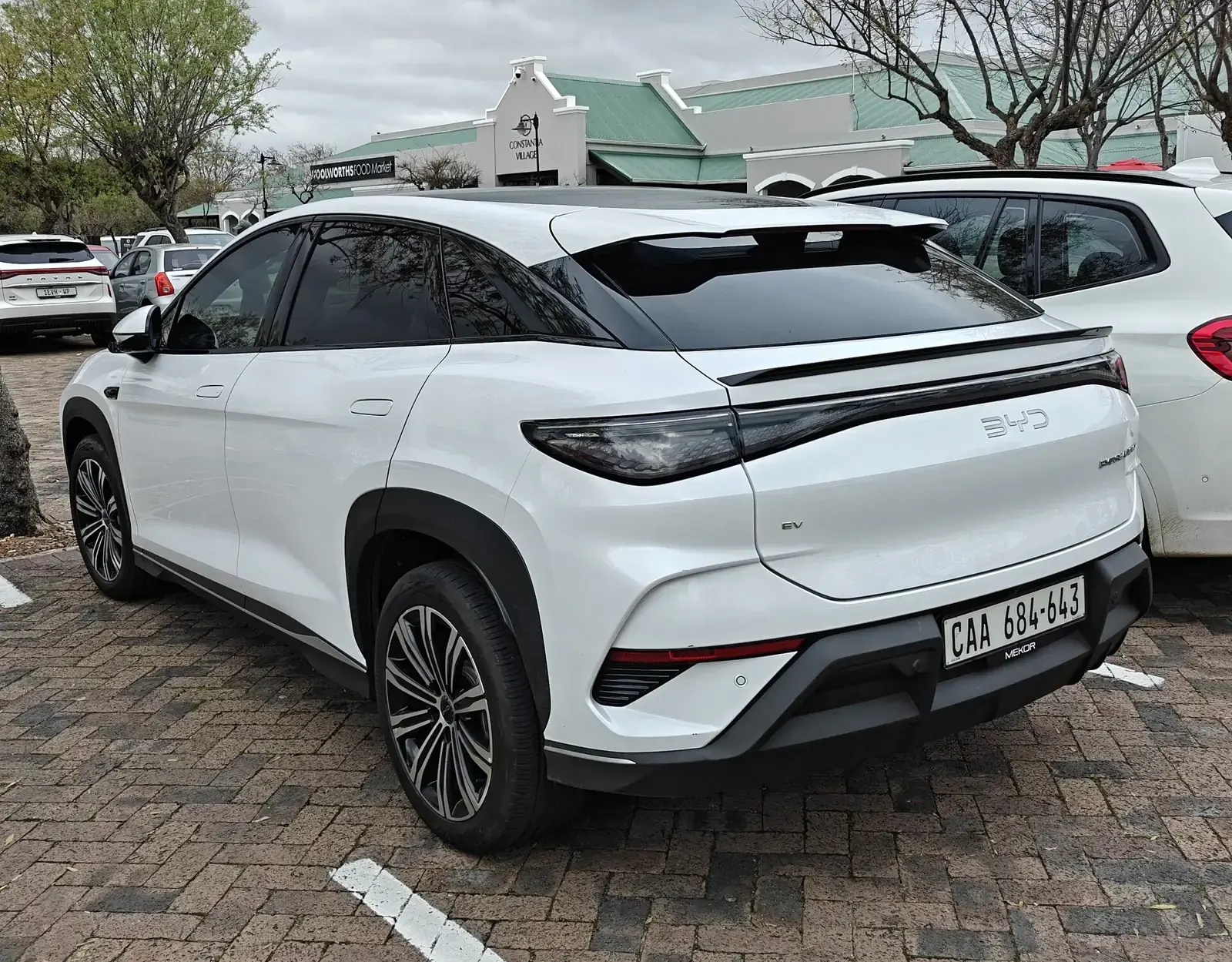
Australia's shift to electric cars kept going in October. The Federal Chamber of Automotive Industries (FCAI) said battery electric vehicles (BEVs) made up 23.1 per cent of sales from all sources, up from 7.3 per cent in October 2025.
That share was slightly lower than the month before. GoAuto’s September market report puts September at 24.2 per cent and August at 24.9 per cent, so this is the second small monthly dip in a row. Even so, it is still about three times last year's level.
The headline numbers
- 103,325 new vehicles were recorded through VFACTS in October, up 3.8% year on year (FCAI).
- 23.1% BEV share from all sources, compared with 7.3% in October 2025 (FCAI).
- Petrol sales fell 35.9% and diesel sales fell 14.7% compared with October 2025 (FCAI).
- China supplied 36.3% of VFACTS-recorded vehicles, ahead of Japan (23.3%), Thailand (17.9%) and South Korea (9.2%) (FCAI).
Combined BEV, plug-in hybrid and conventional hybrid deliveries totalled 55,024, or 51.2% of October’s combined market, according to GoAuto. This monthly figure is separate from the AAA’s September-quarter result below.
A note on the data: Tesla and Polestar don't report through VFACTS. They report deliveries separately to the Electric Vehicle Council (EVC). FCAI's 23.1% BEV share is an all-sources figure that includes those two brands, so it is not a percentage of the 103,325 VFACTS total. Adding 4,050 Teslas and 118 Polestars gives a combined denominator of 107,493 vehicles.
Based on combined FCAI and EVC data, GoAuto reports 24,845 BEV deliveries in October against 23,605 petrol registrations. That means EVs outsold petrol cars again. Diesel still came out ahead of both, with 25,649.
Who sold what
Toyota led the brands with 20,649 sales. BYD was second with 10,025, followed by Ford (7,310), Kia (5,801), Mazda (5,730), MG (4,676), Hyundai (4,571), GWM (4,417), Geely (4,365) and Chery (4,317).
Three EVs made FCAI's VFACTS top 10:
- the BYD Sealion 7, fourth with 2,524 sales
- the BYD Atto 2, seventh with 1,943
- the Geely EX5, ninth with 1,789
The BYD Shark 6 plug-in hybrid ute came eighth with 1,843.
According to EVC figures reported by GoAuto, Tesla delivered 4,050 vehicles in October. That is up 342% on October 2025 but down about 28% on September. The total included 3,105 Model Ys and 945 Model 3s. Tesla is listed separately, so the Model Y doesn't appear in FCAI's top-10 table. On a combined basis, GoAuto ranks it fourth overall. Polestar delivered 118 cars.
More than half of new cars are now electrified
The latest EV Index from the Australian Automobile Association (AAA) covers the three months to 30 September. It shows electric and hybrid vehicles made up 51.6% of new light-vehicle sales. This is the first time the combined share has passed half of a quarter's sales.
- BEV sales hit a quarterly record of 76,947, up from 69,414 in the June quarter and 34,435 in the March quarter.
- BEV share was 24.34%, up from 21.03% in Q2 and 12.25% in Q1.
- Conventional hybrids took 17.46% and PHEVs took 9.79%.
- Petrol and diesel (ICE) cars fell to 48.41%, down from 64.23% in the March quarter.
- In medium SUVs, Australia's most popular segment, BEVs now take 41.06% of sales.
"Australian motorists are sending a very clear message," said AAA managing director Michael Bradley. "With fuel prices remaining high and choice improving as more models become available across key vehicle segments, consumers are voting with their wallets and embracing new technologies."
Why it's happening
The FCAI points to four main reasons:
- stronger competition
- "continuing instability in the Middle East"
- sustained higher fuel prices
- the Federal Government’s tax concessions for EVs
"Consumers are making rational choices and are attracted to options that reduce their costs," said FCAI chief executive Tony Weber.
In the same statement, he added: "This increase in new vehicle demand, especially BEVs, must be supported by reliable and accessible charging infrastructure that keeps pace with demand."
What it means for buyers
There's more choice than ever. Chinese brands, led by BYD and Geely, are winning sales with EVs priced in mainstream territory.
Charging access remains a practical constraint for buyers who cannot plug in at home. The federal government’s $40 million Accelerating EV Charging Program supports kerbside charging and regional blackspots. DCCEEW lists grant activities commencing in March 2027, with the program running to June 2029. The program remains subject to the Australian Energy Market Commission’s final rule decision; its rule-change page lists 17 December 2026.
If you're thinking of using a novated lease, check our explainer on the FBT exemption changes due in 2027 before you sign.
Related: September VFACTS: EVs beat petrol
Sources
- GoAuto, September market report (24.2% September and 24.9% August): https://www.goauto.com.au/news/vfacts/sales-2026/vfacts-ev-sales-strong-in-september/2026-10-06/100649.html
- FCAI, "Competition drives strong new vehicle market", 5 Nov 2026: https://www.fcai.com.au/competition-drives-strong-new-vehicle-market/
- AAA, "EV surge continues in September quarter", Nov 2026: https://www.aaa.asn.au/2026/11/ev-surge-continues-in-september-quarter/
- GoAuto, "VFACTS: EVs outsell petrol in October", 5 Nov 2026 (EVC Tesla/Polestar figures and combined totals): https://www.goauto.com.au/news/vfacts/sales-2026/vfacts-evs-outsell-petrol-in-october/2026-11-05/100961.html
- DCCEEW, Accelerating EV Charging Program: https://www.dcceew.gov.au/energy/transport/driving-the-nation-fund/accelerating-electric-vehicle-charging-program
- AEMC rule change page: https://www.aemc.gov.au/rule-changes/facilitating-ev-charging-infrastructure-rollout-under-commonwealth-grants