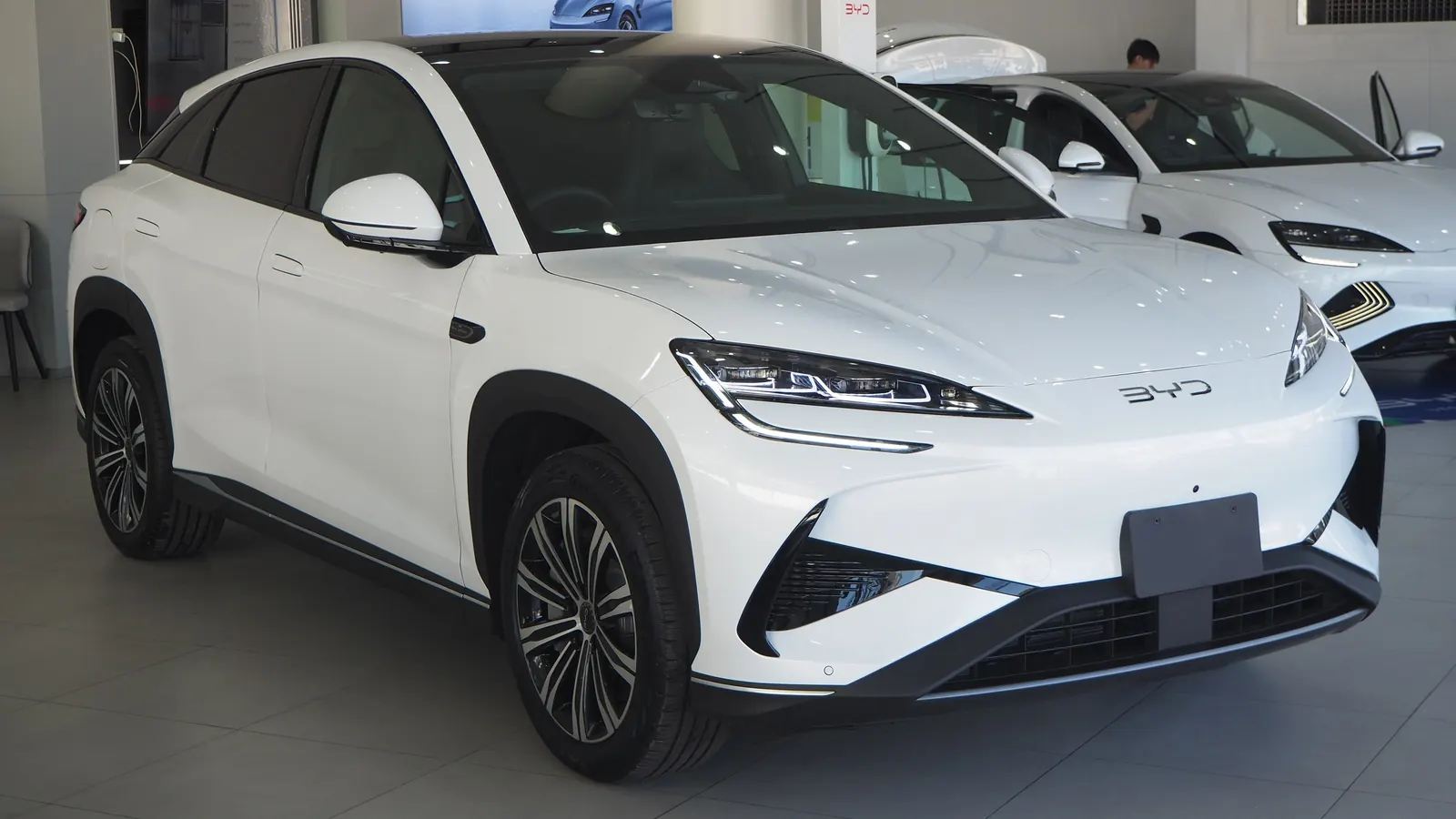
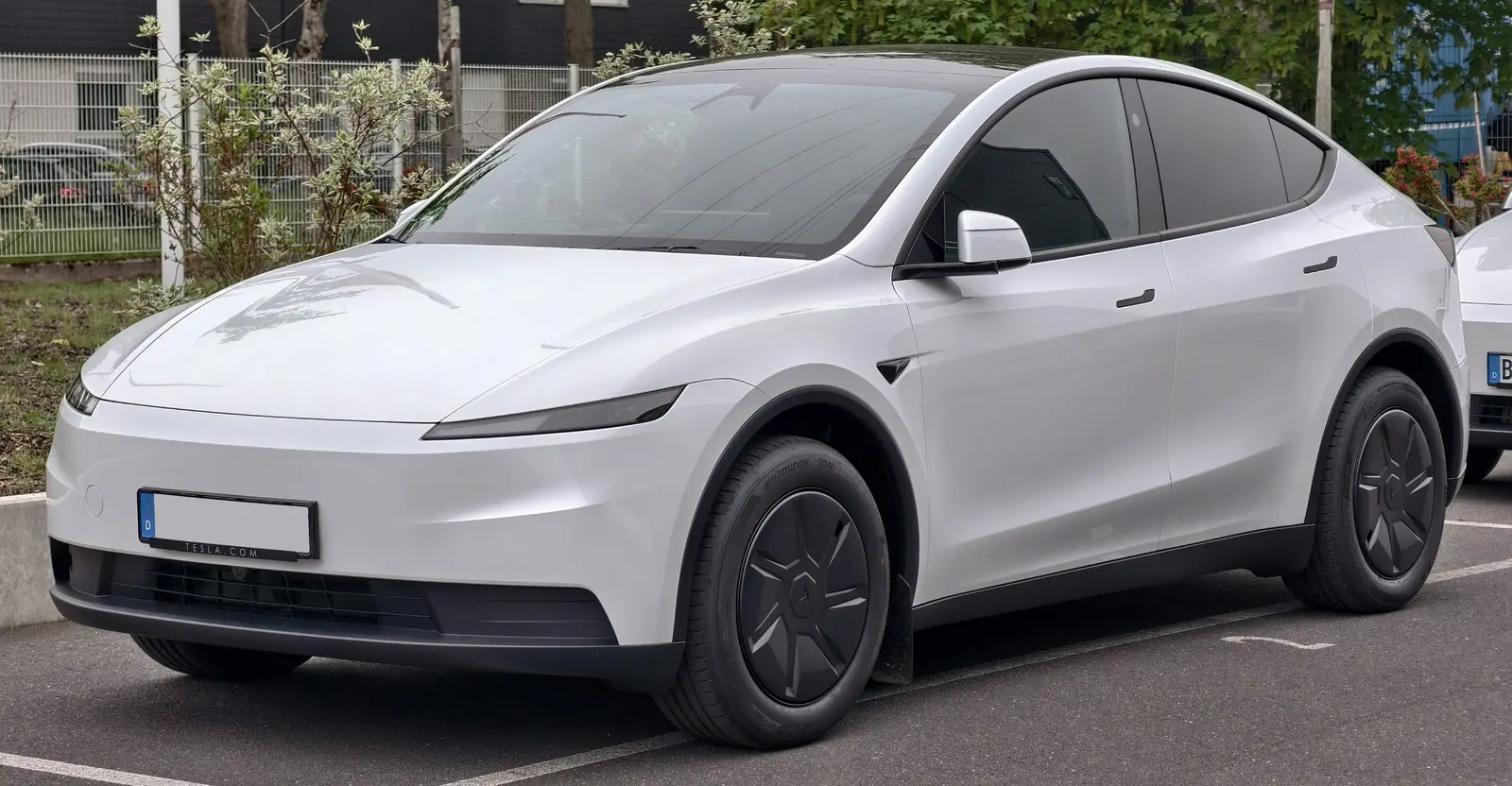
As of November 2026, the BYD Sealion 7 and the Tesla Model Y are two of the mid-size electric SUVs Australians actually buy. Both come in a cheaper rear-drive model and a faster dual-motor version, both have a five-star ANCAP rating from 2025, and both can be charged at home on a Type 2 cable. They are not the same car. The Sealion 7 is longer, heavier and cheaper on the official prices before on-roads that we compared: the Sealion 7 Premium is $54,990 against $58,900 for the Model Y Premium RWD, and the Sealion 7 Performance is $63,990 against $84,900 for the Model Y Performance. The Model Y officially quotes more WLTP range on its Long Range and Performance versions, a higher peak DC charging rate, and it is the car that can be had with six seats.
This is a specifications and price comparison from manufacturer publications, ANCAP, the Green Vehicle Guide and independent range tests, not a road test. EV Select has not driven these cars for this guide, and there are no scores or driving impressions here.
How much do the Sealion 7 and Model Y cost in Australia?
Compare prices on the same basis. The figures below that sit before on-road costs are the like-for-like starting point. Drive-away figures are labelled separately, for Victoria and personal registration, and should not be lined up against a before-on-roads price.
BYD Sealion 7, from BYD Australia’s official configurator as checked on 13 November 2026, has two list prices. These are the GST-inclusive vehicle prices shown against each variant, before on-road costs.
| Sealion 7 variant | Drive | List price (before on-roads) | Estimated drive-away, VIC personal, postcode 3000 |
|---|---|---|---|
| Premium | Rear-wheel drive | $54,990 | $59,495.75 |
| Performance | All-wheel drive | $63,990 | $68,873.75 |
The drive-away estimates come from BYD Australia’s official configurator on 13 November 2026, for postcode 3000 (Melbourne) and Personal registration (the configurator’s value is “Private”), on the default specification (Aurora White, no added accessories). They include stamp duty, registration, CTP, a standard plate fee and a $1,100 dealer delivery fee. They do not include BYD’s current $4,000 cashback or 6% novated-lease discount. BYD says a postcode is required to estimate a drive-away figure, and that final drive-away prices may vary.
BYD’s 2026 specification brochure shows Aurora White as standard on both variants; Atlantis Grey, Cosmos Black and Shark Grey are marked as options, with no paint prices printed in the brochure. BYD’s current 6% novated-lease terms state that metallic paint is available at an additional cost.
Two official promotions apply to both Sealion 7 variants on the BYD offers page, as checked on 13 November 2026: a $4,000 cashback (orders between 1 October and 21 December 2026, delivery by 31 December 2026) and a 6% novated-lease discount off the base vehicle list price, excluding on-road costs (orders in the same window, delivery by 31 January 2027). The 6% offer is for eligible novated-lease clients processed through an approved fleet management organisation. BYD’s terms say the two offers cannot be used together. An earlier “free on-road costs, from $54,990 drive-away” campaign for the Premium was limited to orders between 1 August and 30 September 2026 with delivery by 31 October 2026, and is not treated here as a current price.
Tesla Model Y. Prices below are from Tesla Australia’s order page at tesla.com/en_au/modely/design, read on 13 November 2026 at about 8:57pm AEDT, on the Cash tab, with the state set to Victoria and Personal registration, in the default configuration. The price on each variant card is not labelled on the page; we call it the price shown on Tesla’s order page, before on-road costs. The bottom bar is labelled “Drive Away Price.”
| Model Y variant | Drive | Seats | Price shown on Tesla’s order page, before on-road costs | Drive-away price, VIC personal, default configuration |
|---|---|---|---|---|
| Premium Rear-Wheel Drive | Rear-wheel drive | 5 | $58,900 | $64,513 |
| Premium Long Range All-Wheel Drive | Dual-motor AWD | 5 | $68,900 | $74,933 |
| Model Y L Premium | Dual-motor AWD | 6 | $74,900 | $81,185 |
| Performance | Dual-motor AWD | 5 | $84,900 | $91,605 |
The fair like-for-like comparison, before on-road costs, is the Sealion 7 Premium at $54,990 against the Model Y Premium RWD at $58,900 (a $3,910 gap) and the Sealion 7 Performance at $63,990 against the Model Y Performance at $84,900 (a $20,910 gap). On the Victoria personal drive-away figures above, the Premium pairing is $59,495.75 against $64,513, and the Performance pairing is $68,873.75 against $91,605. Those drive-away figures are before BYD’s cashback or novated-lease discount and before Tesla’s trade-in bonus.
The same Tesla order page showed: “Unlock up to a $2,000 Trade-In Bonus — Until 31 December 2026. See Terms.” Estimated delivery for a Performance in Victoria was shown as December 2026 – January 2027; that is a snapshot for that configuration, not a delivery promise for every variant. A Home Charger was listed at $890 as a separate item and is not included in the drive-away prices above.
On-road costs (stamp duty, registration, CTP and any delivery fee) sit on top of a before-on-roads price and vary by state. Do not compare a BYD list price with a Tesla drive-away price, or the other way around.
Which variants are sold here?
The Sealion 7 is a five-seat, two-row SUV in Premium (RWD, 230 kW, 6.7 s 0–100 km/h, 482 km WLTP) and Performance (AWD, 390 kW combined, 4.5 s, 456 km WLTP) form. Both use the same 82.56 kWh BYD Blade battery, 11 kW AC (Type 2) and 150 kW DC (CCS2) charging, according to BYD Australia’s 2026 brochure and configurator.
The current Australian Model Y is the 2025-on facelift (often nicknamed Juniper). Tesla Australia’s specifications, as published on tesla.com/en_au/modely and confirmed on the order page for range, 0–100 km/h, top speed and wheels, are:
| Model Y variant | Seats | Drive | WLTP range | 0–100 km/h | Top speed | Supercharging max | Range added in 15 min (Tesla figure) |
|---|---|---|---|---|---|---|---|
| Premium Rear-Wheel Drive | 5 | Rear-wheel drive | 466 km | 5.9 s | 201 km/h | 175 kW | Up to 238 km |
| Premium Long Range All-Wheel Drive | 5 | Dual-motor AWD | 600 km | 4.3 s | 201 km/h | 250 kW | Up to 266 km |
| Model Y L Premium | 6 | Dual-motor AWD | 681 km | 4.5 s | 201 km/h | (see note) | Up to 288 km |
| Performance | 5 | Dual-motor AWD | 580 km | 3.5 s (Tesla footnote: “with rollout subtracted”) | 250 km/h | 250 kW | Up to 243 km |
Tesla’s 15-minute charging figures are “based on constant speed data.” The Model Y L figure of 288 km in 15 minutes appears on tesla.com/en_au/modely; Tesla’s Supercharging maximum in kilowatts for the L was not clearly separated in the text we could verify, so it is not quoted as a kW peak here. Tesla lists 19- or 20-inch wheels for the Premium five-seaters, 19-inch wheels for the Model Y L on the order page, and 21-inch wheels for Performance.
More detail on individual trims is in our Sealion 7 Premium, Sealion 7 Performance, Model Y RWD and Model Y L buyer’s guides, and in our six-seat Model Y L explainer. This article is the head-to-head; those pages stay useful for a single-car deep dive.
You can also compare these variants in our BYD Sealion 7 and Tesla Model Y listings in the EV Select database, which include independent highway-test results where they match an Australian variant.
How do the official figures compare?
The table uses manufacturer figures unless a row is marked as an independent test or an assumption. Tesla does not publish a battery capacity in kilowatt-hours, a peak power figure in kilowatts, a wheelbase or a 10–80% charge time on the Australian Model Y specifications we could verify; those cells are left blank rather than filled from a third party.
| Sealion 7 Premium | Sealion 7 Performance | Model Y Premium RWD | Model Y Premium Long Range AWD | Model Y Performance | |
|---|---|---|---|---|---|
| Price before on-roads | $54,990 (BYD list) | $63,990 (BYD list) | $58,900 (Tesla order page) | $68,900 (Tesla order page) | $84,900 (Tesla order page) |
| Drive-away, VIC personal | $59,495.75 (BYD configurator, postcode 3000) | $68,873.75 (BYD configurator, postcode 3000) | $64,513 (Tesla order page, default) | $74,933 (Tesla order page, default) | $91,605 (Tesla order page, default) |
| Drive | RWD | AWD | RWD | AWD | AWD |
| Seats | 5 | 5 | 5 | 5 | 5 |
| Battery | 82.56 kWh Blade | 82.56 kWh Blade | Not published by Tesla AU | Not published by Tesla AU | Not published by Tesla AU |
| Official range | 482 km WLTP (567 km NEDC) | 456 km WLTP (542 km NEDC) | 466 km WLTP | 600 km WLTP | 580 km WLTP |
| Independent 120 km/h range (Bjørn Nyland) | No matched test found | 312 km (European-market 82.5 kWh Performance, 20°C, dry, summer 245/45-20) | No matched test found | 371 km (“Model Y LR Juniper”, 11°C, dry, winter 255/45-19) | 353 km (“Performance Juniper”, 12°C, wet, 21-inch Pirelli P Zero) |
| Peak DC / AC | 150 kW CCS2 / 11 kW Type 2 | 150 kW CCS2 / 11 kW Type 2 | 175 kW Supercharging max; AC not published on the AU spec we verified | 250 kW Supercharging max; AC not published | 250 kW Supercharging max; AC not published |
| Manufacturer 10–80% time | Not published by BYD Australia | Not published by BYD Australia | Not published (15-min range-add figure only) | Up to 266 km in 15 min | Up to 243 km in 15 min |
| 0–100 km/h | 6.7 s | 4.5 s | 5.9 s | 4.3 s | 3.5 s (rollout subtracted) |
| Peak power | 230 kW | 390 kW | Not published on the AU spec we verified | Not published | Not published |
| Kerb weight | 2,225 kg | 2,340 kg | 1,921 kg | 1,992 kg | 2,033 kg |
| Length / width / height | 4,830 / 1,925 / 1,620 mm | Same | 4,792 mm long; 1,982 mm wide mirrors folded, 2,129 mm extended; 1,624 mm high | Same as RWD | 4,796 mm long; same width; 1,611 mm high |
| Wheelbase | 2,930 mm | 2,930 mm | Not published on the AU spec we verified | Not published | Not published |
| Cargo (as published) | 500 L rear, 58 L front (558 L combined) | Same | 2,138 L cargo (Tesla figure; method not broken down on the page) | 2,138 L cargo | 2,138 L cargo |
| ANCAP | 5 stars, 2025, all variants | 5 stars, 2025, all variants | 5 stars, 2025, all five-seat variants from May 2025 | Same five-seat rating | Same five-seat rating |
| Vehicle warranty | 6 years or 150,000 km | Same | 5 years, unlimited km | 5 years, unlimited km | 5 years, unlimited km |
| Battery warranty | 8 years or 160,000 km | Same | 8 years or 160,000 km | 8 years or 192,000 km | 8 years or 192,000 km |
| GVG energy use | 170 Wh/km | 179 Wh/km | See Green Vehicle Guide section (variant mapping) | See Green Vehicle Guide section | See Green Vehicle Guide section |
The six-seat Model Y L (price shown on Tesla’s order page $74,900, VIC personal drive-away $81,185, 681 km WLTP, 4.5 s 0–100 km/h, 19-inch wheels, up to 288 km added in 15 minutes, separate five-star ANCAP rating) is in the Tesla range but is a different body than the five-seat Model Y, and it is not a like-for-like rival to the five-seat Sealion 7. Our Model Y L buyer’s guide covers it.
What official range and battery size do they have?
Both Sealion 7s use an 82.56 kWh Blade battery. BYD Australia quotes WLTP combined range of 482 km for the Premium and 456 km for the Performance, and it also quotes older NEDC figures of 567 km and 542 km. WLTP is the fairer official comparison with the Model Y. BYD’s own site says declared WLTP figures are a guide only and that real range depends on driving style, load and traffic.
Tesla Australia quotes WLTP range only: 466 km for the Premium RWD, 600 km for the Premium Long Range AWD, 580 km for the Performance and 681 km for the Model Y L. Tesla says the WLTP standard is useful for comparing ranges among electric vehicles, and that actual range varies with speed, weather and elevation. Tesla did not publish a battery capacity in kWh on the Australian Model Y specifications we could verify, so no Tesla battery size is given here.
On official WLTP figures, the five-seat Long Range Model Y and the Performance Model Y are rated well ahead of either Sealion 7. The Premium RWD Model Y (466 km) sits close to, and a little behind, the Sealion 7 Premium (482 km) and a little ahead of the Sealion 7 Performance (456 km). Official test-cycle range is not a highway result.
What have independent highway tests shown?
The figures below are from Bjørn Nyland’s published range-test spreadsheet, and, for the Sealion 7, from his matching YouTube test. They are independent tests of specific cars under stated conditions, not official Australian range claims and not EV Select’s own road tests. Wheel, tyre and battery fitment can differ from an Australian-delivered car.
BYD Sealion 7 Performance (82.5 kWh). Nyland tested a European-market Sealion 7 Performance with an 82.5 kWh battery — the same advertised capacity, to one decimal place, as the 82.56 kWh battery on the Australian car — on Michelin Pilot Sport EV summer tyres in 245/45-20, which is the Australian Performance wheel size. The test was in dry conditions at 20°C (his video places it at night on a motorway in Chiang Mai, Thailand). At a constant 120 km/h he recorded 312 km and 257 Wh/km (25.7 kWh/100 km), using a measured 80.3 kWh of capacity. At 90 km/h he recorded 446 km and 180 Wh/km. He also tested 93 kWh Sealion 7s; those results are omitted here because Australia is not sold a 93 kWh Sealion 7. We found no Nyland 120 km/h result that matches the rear-drive Sealion 7 Premium.
Tesla Model Y Long Range, facelift (“Model Y LR Juniper” in the spreadsheet). At a constant 120 km/h Nyland recorded 371 km and 201 Wh/km, in dry conditions at 11°C, on Nokian R5 EV winter tyres in 255/45-19, with 74.5 kWh of measured capacity. At 90 km/h the same test logged 521 km. Winter tyres and 11°C are not a warm Australian summer day, so this is a conservative condition rather than a best-case one. Tesla Australia offers 19- or 20-inch wheels on the Premium Long Range AWD; this test used 19s. It should not be applied to the cheaper Australian Premium RWD, which has a lower official WLTP range (466 km against 600 km).
Tesla Model Y Performance, facelift. Nyland recorded 353 km at 120 km/h and 471 km at 90 km/h, at 12°C, on wet roads, with Pirelli P Zero summer tyres in 255/35-21 (front) and 275/35-21 (rear) and 77.3 kWh of measured capacity. Tesla Australia lists 21-inch wheels for Performance, which matches the test car’s size. Because the surface was wet, this result is not directly comparable with the dry Sealion 7 or Long Range tests.
Nyland also has a “Model Y LR RWD Juniper” result (447 km at 120 km/h, dry, 19°C, 19-inch Hankook tyres). We have not treated that as a match for the Australian Premium RWD, because Tesla Australia quotes a much lower WLTP range for the RWD than for its Long Range models, and Tesla does not publish a kWh figure that would let us confirm it is the same battery. No matched 120 km/h test for the current Australian Model Y Premium RWD is included here. That is the same gap noted in our highway-range round-up.
How fast do they charge?
On BYD Australia’s specifications, both Sealion 7s charge at up to 11 kW AC (Type 2) and 150 kW DC (CCS2). BYD Australia does not publish a 10–80% time in the 2026 brochure or on the configurator. Vehicle-to-load (V2L) is listed as standard, with a discharge adapter included.
On Tesla Australia’s Model Y specifications, peak Supercharging is 175 kW for the Premium RWD and 250 kW for the Premium Long Range AWD and the Performance, on a pay-per-use basis. Tesla does not publish a 10–80% time on that page. It does publish range added in 15 minutes, “based on constant speed data”: up to 238 km (Premium RWD), 266 km (Long Range AWD), 243 km (Performance) and 288 km (Model Y L). Tesla’s AC home-charging rate in kilowatts was not on the Australian specification block we could verify, so it is not quoted.
A higher official peak rate does not, by itself, tell you how long a road-trip stop will take, because the curve after the peak matters. Neither manufacturer has given us a 10–80% time to compare on the same basis.
How big are they, and how much can they carry?
The Sealion 7 is the longer, wider (body) car in the official numbers: 4,830 mm long, 1,925 mm wide, 1,620 mm high, on a 2,930 mm wheelbase, according to BYD’s 2026 brochure. Front and rear track are 1,660 mm. BYD quotes 500 litres for the rear trunk and 58 litres for the front trunk, or 558 litres combined — the figure used on the brochure cover.
The five-seat Model Y, on Tesla Australia’s page, is 4,792 mm long (4,796 mm for Performance), 1,624 mm high (1,611 mm for Performance), with overall width given as 1,982 mm with the mirrors folded and 2,129 mm with them extended. Ground clearance is 167 mm on the Premium cars and 151 mm on the Performance. Tesla did not publish a wheelbase, a body width excluding mirrors, or a separate rear-boot and frunk split on the Australian specifications we verified. It does publish a single cargo figure of 2,138 litres for the Premium RWD, Long Range AWD and Performance. That number is not directly comparable with BYD’s 500-litre rear / 58-litre front split, because Tesla has not said on that page whether 2,138 litres includes seats folded and the front trunk. Do not treat 2,138 litres as a like-for-like “boot is four times bigger” claim.
Both five-seat cars have five seats. Only the Model Y L officially adds a third row and six seats.
Power, acceleration and weight
The Sealion 7 Premium has a 230 kW, 380 Nm rear motor and a claimed 6.7 s 0–100 km/h time; kerb weight is 2,225 kg. The Performance adds a 160 kW, 310 Nm front motor for a combined 390 kW and 690 Nm, a claimed 4.5 s, and a 2,340 kg kerb weight. Gross vehicle mass is 2,635 kg and 2,750 kg respectively.
Tesla Australia quotes 0–100 km/h times of 5.9 s (Premium RWD), 4.3 s (Premium Long Range AWD), 4.5 s (Model Y L, confirmed on the 13 November 2026 order page) and 3.5 s for the Performance, the last with the footnote “with rollout subtracted.” Official top speeds on that order page are 201 km/h for the Premium RWD, Long Range AWD and Model Y L, and 250 km/h for the Performance. Official kerb weights, from tesla.com/en_au/modely, are 1,921 kg, 1,992 kg and 2,033 kg for the RWD, Long Range AWD and Performance. We did not find a published kerb weight for the Model Y L. Tesla did not publish peak power in kilowatts on the Australian specification block we could verify. On the official weights, every five-seat Model Y is several hundred kilograms lighter than the matching-drive Sealion 7.
What ANCAP ratings do they have?
Both cars have a five-star ANCAP rating with a 2025 date stamp, expiring in December 2031.
The Sealion 7 rating applies to all variants, for vehicles built from January 2025 and on sale from February 2025. Scores are 87% adult occupant protection, 93% child occupant protection, 76% vulnerable road user protection and 78% safety assist. ANCAP’s April 2025 media release, which announced the five-star result, noted full points in the side, oblique pole and far-side tests, and weaker chest protection for the rear passenger in the full-width test.
The five-seat Model Y rating applies to all five-seat, two-row variants built from February 2025 and on sale from May 2025 — the current facelift cars. It does not apply to the Model Y L, or to five-seat Model Ys built and sold before May 2025, which have separate ratings. Scores are 91% adult occupant, 95% child occupant, 86% vulnerable road user and 92% safety assist. ANCAP’s 20 November 2025 media release said the updated Model Y “maintains its five-star rating” and achieved the top Safety Assist score for vehicles tested under the 2023–2025 protocols.
The Model Y L has its own five-star rating (ANCAP’s media release of that result is titled as a five-star award), for six-seat, three-row cars built from February 2026 and on sale from March 2026. It is based on testing of the related five-seat Model Y, with technical information provided to show the results also apply. Scores are 91% adult occupant, 88% child occupant, 86% vulnerable road user and 92% safety assist. ANCAP notes that some second-row child-restraint installations may need an extension strap, and that some convertible restraints could not be easily installed on the third-row ISOFix anchors.
What warranty and servicing do they have?
BYD Australia states, on the Sealion 7 page, a vehicle warranty of 6 years or 150,000 km, whichever comes first, and a traction-battery warranty of 8 years or 160,000 km, whichever comes first, with terms and exclusions. The official warranty statement is linked from that page. The configurator also lists a complimentary one year of roadside assistance. Servicing is through BYD dealers. We did not find a published capped-price service schedule for the Sealion 7 on BYD Australia’s site this turn.
Tesla Australia’s Model Y page states a basic vehicle warranty of 5 years and unlimited kilometres, with terms, limitations and exclusions, and a battery and drive-unit warranty of 8 years or 160,000 km (Premium RWD) or 8 years or 192,000 km (Premium Long Range AWD and Performance), whichever comes first. The Model Y L battery-warranty kilometre cap was not clearly separated in the tesla.com/en_au/modely text we could verify, so it is not restated here. We did not find a published capped-price service schedule on tesla.com/en_au this turn, and we have not independently opened Tesla’s detailed warranty PDF in this research.
What does the Green Vehicle Guide say about energy use?
The Australian Government’s Green Vehicle Guide lists official laboratory energy consumption. As checked on 13 November 2026, the 2025 BYD Sealion 7 Premium is listed at 170 Wh/km and the Performance at 179 Wh/km. The range column on the same GVG rows shows 567 km and 542 km, which match BYD’s NEDC figures rather than its WLTP figures; treat those GVG range numbers with that caution. The Guide itself says actual energy use depends on how you drive.
For the 2026 Tesla Model Y, GVG lists several variants between 144 and 162 Wh/km, including a six-seat AWD Long Range at 144 Wh/km (681 km in the Guide’s range column, matching Tesla’s Model Y L WLTP figure) and Performance-labelled rows at 161–162 Wh/km with a 580 km range column, matching Tesla’s Performance WLTP figure. Where a test cycle is named on those Model Y rows, it is WLTP (4-phase). Because GVG uses internal variant codes, buyers should look up their exact Australian variant on the Guide rather than assume a single Model Y figure.
On those official test numbers, the listed Model Y variants use less electricity per kilometre than either Sealion 7. That is a laboratory comparison, not a real-world highway result.
Who should buy the Sealion 7, and who should buy the Model Y?
The Sealion 7 suits a buyer who wants a larger-bodied five-seat SUV, a published 82.56 kWh battery, V2L as standard, and a lower official price than the matching Tesla before on-roads — $54,990 against $58,900 for the rear-drive pairing, and $63,990 against $84,900 for the Performance pairing. The Performance’s official 4.5 s and 390 kW are strong on paper at that $63,990 list price. BYD’s six-year / 150,000 km vehicle warranty is longer in years than Tesla’s five-year unlimited-kilometre basic warranty, though the kilometre cap is lower if you drive a long way. Choose the Premium if official WLTP range and price matter more than acceleration; choose the Performance if you want AWD and the quicker official 0–100 km/h time, knowing the official WLTP range drops to 456 km and Nyland’s matched 120 km/h test of a European Performance was 312 km.
The Model Y suits a buyer who wants the officially longer-range five-seat options (600 km or 580 km WLTP), a higher official peak DC rate (250 kW on the Long Range and Performance, 175 kW on the RWD), Tesla’s Supercharger network and a lighter official kerb weight. The Long Range AWD, at $68,900 before on-roads, is the obvious five-seat range-and-charging choice on official figures, and Nyland’s dry, cold, winter-tyre 120 km/h result of 371 km still sits well ahead of his dry, mild 312 km Sealion 7 Performance test. The Performance is the official 0–100 km/h leader, at 3.5 s with rollout subtracted, and the official top-speed leader at 250 km/h, at a $84,900 price before on-roads. The Model Y L, at $74,900 before on-roads and 4.5 s 0–100 km/h, is the one to consider if you actually need a sixth seat; it is not just a higher-spec five-seater. The Premium RWD is the value Tesla, but it has no matched Nyland 120 km/h test in this guide, and its official WLTP range (466 km) is close to the cheaper Sealion 7 Premium.
Look at the Sealion 7 first if the price before on-roads, a bigger official battery and a longer vehicle warranty in years are the priority, and most of your charging is at home. Look at the Model Y first if official highway-capable range, faster official DC charging and Tesla’s charging network matter, or if you need six seats. In either case, get a current drive-away figure for your postcode — from BYD’s configurator or Tesla’s order page — before you treat any number in this guide as what you will pay.
This is general information, not purchase or finance advice. Offers and prices change; confirm them with BYD, Tesla or your dealer.
Frequently asked questions
Is the Sealion 7 cheaper than the Model Y in Australia?
On the official prices before on-roads, yes, in the two like-for-like pairings. On 13 November 2026 the Sealion 7 Premium was $54,990 against $58,900 for the Model Y Premium RWD, and the Sealion 7 Performance was $63,990 against $84,900 for the Model Y Performance. Those BYD figures are before the current $4,000 cashback or 6% novated-lease discount (they cannot be combined), and the Tesla figures are before the up-to-$2,000 trade-in bonus. On Victoria personal drive-away estimates, the Premium pairing was $59,495.75 (BYD configurator, postcode 3000) against $64,513 (Tesla order page, default configuration), and the Performance pairing was $68,873.75 against $91,605. Drive-away figures still depend on state, options and any offer, so re-check both sites for your postcode.
Which one has more range?
On official WLTP figures, the Model Y Premium Long Range AWD (600 km), Performance (580 km) and Model Y L (681 km) are ahead of both Sealion 7s (482 km and 456 km). The Sealion 7 Premium (482 km WLTP) is slightly ahead of the Model Y Premium RWD (466 km). In independent 120 km/h tests that we could match, Nyland’s Long Range Juniper result (371 km, cold, winter tyres) is ahead of his Sealion 7 Performance result (312 km, mild and dry). There is no matched 120 km/h test here for the rear-drive Sealion 7 Premium or the Australian Model Y Premium RWD.
Which one charges faster?
Tesla publishes a higher peak Supercharging rate (175 kW or 250 kW, depending on the variant) than BYD’s 150 kW DC. Tesla also publishes a 15-minute range-add figure; BYD Australia does not publish a 10–80% time. Peak rate is not the same as a full charging curve, so a real stop can differ.
Does either car have seven seats?
No. The Sealion 7 and the standard Model Y have five seats. The Model Y L has six seats in three rows. Neither is a seven-seater. See our family EV SUV guide if you need a third row with seven official seats.
Are these the same cars Bjørn Nyland tested?
The Sealion 7 Performance test is a European-market car with the same advertised 82.5 kWh-class battery and the same 245/45-20 tyre size as the Australian Performance. It is still an overseas test, not an Australian-delivered car. The Model Y results used here are facelift (“Juniper”) tests; the Long Range test was on winter tyres in the cold, and the Performance test was on wet roads. They are useful evidence, not a brochure replacement.
Where should I look up official energy use?
The Green Vehicle Guide lists laboratory energy consumption for Australian-certified variants. As checked on 13 November 2026, the Sealion 7 Premium is at 170 Wh/km and the Performance at 179 Wh/km; listed 2026 Model Y variants sit between 144 and 162 Wh/km. Actual use on the road will differ.
Will these prices still be right next month?
Possibly not. BYD’s cashback and novated-lease offers have published end dates in December 2026 and January 2027. Tesla’s order page offered “up to a $2,000 Trade-In Bonus” until 31 December 2026. Prices before on-roads can change without a seasonal offer. Use the manufacturer sites for a current figure.
Sources
Prices and specifications are from manufacturer publications checked on 13 November 2026. Independent highway tests are from Bjørn Nyland’s published spreadsheet and are labelled as overseas tests. Dollar figures in the drive-away columns are official Victoria personal estimates from BYD’s configurator (postcode 3000) and Tesla’s order page (default configuration), and are not compared against a before-on-roads price.
- BYD Australia, Sealion 7: product page, configurator, 2026 specification brochure (PDF), offers
- Tesla Australia, Model Y: specifications and order page (Cash tab, Victoria, Personal registration, 13 November 2026)
- ANCAP: Sealion 7, five-seat Model Y (from May 2025), Model Y L
- Green Vehicle Guide: https://greenvehicleguide.gov.au/
- Bjørn Nyland range-test spreadsheet: public results sheet; Sealion 7 Performance video: YouTube
- EV Select buyer’s guides: Sealion 7 Premium, Sealion 7 Performance, Model Y RWD, Model Y L
- EV Select database: Sealion 7 variants, Model Y variants