
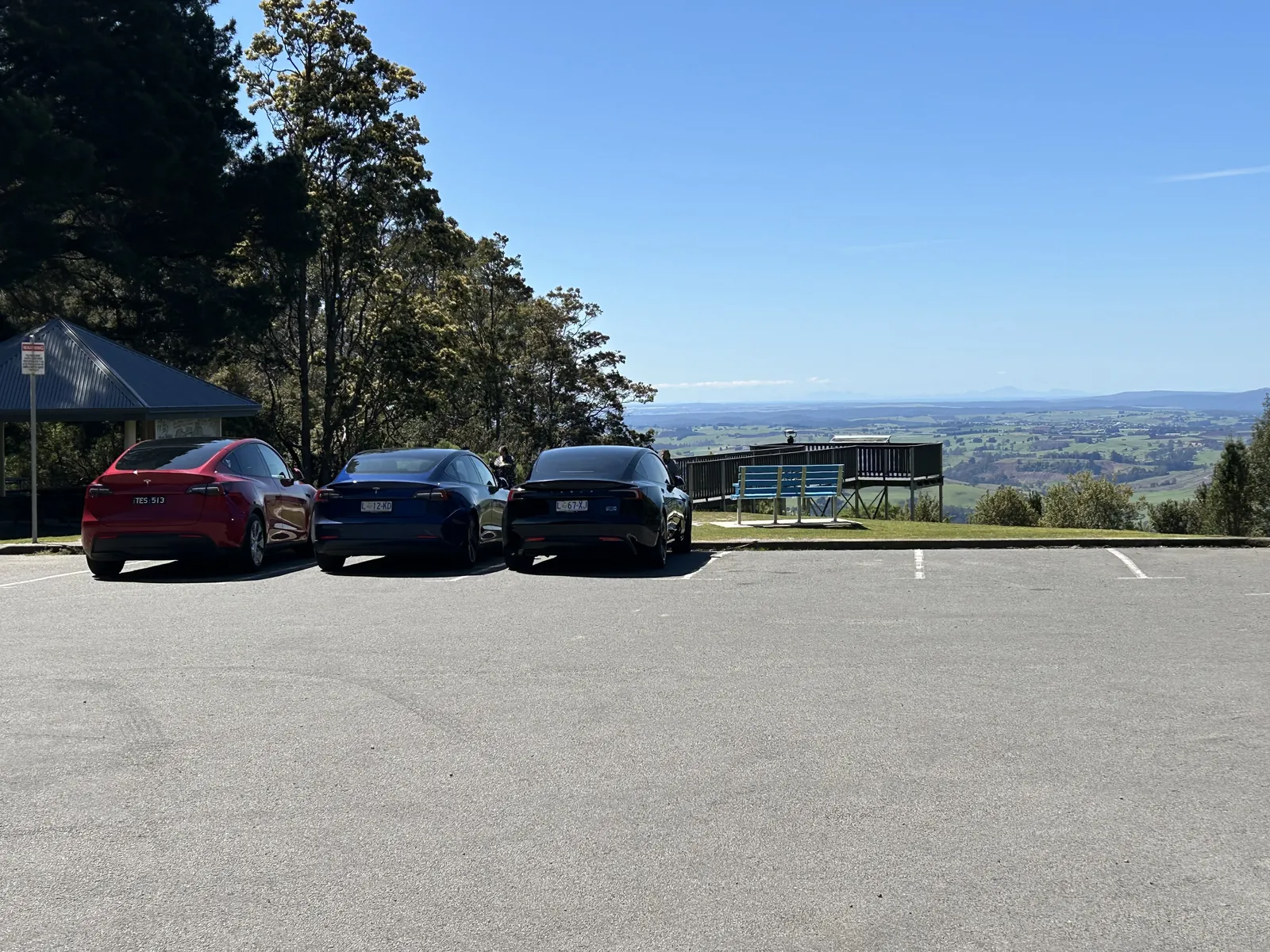
The Electric Vehicle Council has separately argued that cheaper EV running costs can ease fuel-driven inflation. That industry-commissioned analysis is a modelled scenario, not a Treasury costing of the FBT exemption, and it does not tell us what MYEFO will do. This is general information, not tax or financial advice; for a particular lease, speak to your employer, a lease provider, or a registered tax agent.
If the government later announced deeper cuts in the MYEFO, that would be a new decision, with its own start date and any grandfathering still to be specified. It would be a mistake to treat a source-based preview of the budget process as a change to your current lease, or as a reason to rush into a contract without advice.
Nothing in today’s reporting changes the law that applies to a lease you sign this week. The current FBT exemption for eligible electric cars is still in force. The April 2027 tightening is in a bill that has cleared the House but is not yet law, and even that bill would leave existing leases in place. A fuller explainer of the $75,000 test and the 25% discount is on EV Select, alongside our guide to novated-lease EV savings.
What it means for novated-lease buyers now
The 12 November reports go further than that bill. They describe a live budget discussion that could, according to the sources, pare the EV and battery measures back again — or, in the Brisbane Times’ account, drop the EV subsidy entirely. No such decision has been published.
That bill passed the House of Representatives on 29 October 2026. As of 12 November, the official Parliament of Australia bill homepage still lists its status as “Before Reps,” with no Senate introduction recorded. The ATO’s page, last updated 3 November 2026, says: “This measure is not yet law.” It also says existing leases will not be affected by those changes, and that the current discount continues in full until the end of March 2027.
The Electric Car Discount — the fringe benefits tax exemption that makes many novated leases of eligible battery-electric cars so attractive — is already the subject of a separate proposed change that has not yet passed Parliament. The Treasury Laws Amendment (Tax Reform No. 4) Bill 2026 would keep a full FBT exemption for eligible electric cars costing $75,000 or less from April 2027, and move more expensive eligible cars (up to the luxury car tax threshold) to a 25% discount, with all eligible cars on the 25% discount from 1 April 2029. EV Select has previously explained how that would work for novated-lease buyers.
The EV FBT bill is not yet law
The official Cheaper Home Batteries program remains in place. The department describes an upfront discount of around 30% on eligible small-scale batteries (5 kWh to 100 kWh) connected to new or existing solar, delivered through the Small-scale Renewable Energy Scheme. Its page, last updated 9 June 2026, records that the government announced on 13 December 2025 an expansion from original estimates of $2.3 billion to an estimated $7.2 billion over four years, with STC-factor changes from 1 May 2026. The 600,000-install figure is not on that page as checked on 12 November; it comes from the ministerial comments above.
That 600,000 figure matches comments by Climate Change and Energy Minister Chris Bowen, reported by the ABC on 7 November. The same report said the prime minister had not ruled out means-testing either subsidy, and that Environment Minister Murray Watt, after ministers were asked to find savings before MYEFO, called the battery scheme “phenomenally successful” while saying savings were being sought “right across government.” EV Select did not find a separate on-the-record response from Treasurer Jim Chalmers to the 12 November reports, or to the 13 November AFR interview.
Asked about both programs, Prime Minister Anthony Albanese told the Brisbane Times: “We’ll have budget announcements when we make them. We work them through in an orderly way. But the program, for example, on Cheaper Home Batteries, has benefited 600,000 Australian households and small businesses.”
What the government has actually said
Bowen’s comments, as reported by the AFR, confirm that a review at MYEFO is taking place. They are not a decision to cut or keep either program. The 12 November accounts remain source-based reporting of the budget process.
Separately, the Australian Financial Review (Michael Read, 12 November) reported from the COP31 summit in Antalya that former prime minister Malcolm Turnbull urged the government to “means test or scrap” the EV and home battery subsidies. The Brisbane Times also quoted Turnbull as saying the subsidies should be means-tested, and that “there is always a problem with subsidising worthwhile things, that you might actually be subsidising people to do something they would otherwise have done anyway.”
A day earlier, the Brisbane Times and The Sydney Morning Herald (Paul Sakkal) reported, citing government sources briefed on preparation for the mid-year economic and fiscal outlook (MYEFO), that subsidies for household batteries and EVs “could be pared back further,” though “no final decisions have been made and either may still be untouched.” The same report said Labor “could drop the [EV] subsidy entirely,” and that Treasury estimates the EV tax break will cost $1.35 billion this year — 15 times its initial forecast. EV Select has not independently verified that Treasury estimate in a published budget paper; the figures are reported as they appeared in the Brisbane Times.
The AFR also wrote that Bowen “has confirmed his flagship electric vehicle and home battery subsidies are in the sights of Labor’s budget razor gang, but declared now is not the time to completely cut off taxpayer support as he faces a Treasury-led push to drastically wind back the programs.” Those sentences are the newspaper’s characterisation of the interview and of the budget process. They were not presented as a direct quotation in the text EV Select could read. The rest of the article is paywalled. EV Select has not found an official ministerial transcript of the interview on the minister’s website, or a matching on-the-record account in ABC, Guardian, SBS or Sydney Morning Herald coverage checked on the morning of 13 November.
That wording is a direct quotation in the AFR’s accessible text. Bowen’s official title is Minister for Climate Change and Energy; the AFR’s opening referred to him as “Energy Minister.”
Every fiscal event, whether it be a budget or a MYEFO, is not only an opportunity but an obligation to review every policy and say is this working exactly as we intended, or are there any changes that we should make.
In a 13 November dispatch from the COP31 climate summit in Antalya (Michael Read, 5.00am AEDT), the AFR quoted Bowen as telling the newspaper:
Bowen’s on-the-record comments
The Australian Financial Review reports that Climate Change and Energy Minister Chris Bowen has confirmed the government’s electric-vehicle and home battery subsidies are being reviewed ahead of December’s mid-year economic and fiscal outlook. Officials have still not announced a decision, and the existing fringe benefits tax exemption for eligible electric cars remains the law today.
Updated 13 Nov 2026. This article now includes the AFR’s 13 November report of Chris Bowen’s comments at COP31. Officials have still not announced a decision.
Sources
- Australian Financial Review, Michael Read, 13 November 2026: https://www.afr.com/politics/federal/bowen-confirms-ev-and-battery-subsidies-in-firing-line-20261113-p61dtu
- Brisbane Times / Sydney Morning Herald, Paul Sakkal, 12 November 2026: https://www.brisbanetimes.com.au/politics/federal/popular-ev-battery-perks-at-risk-as-razor-gang-debates-new-cuts-20261112-p61d86.html
- Australian Financial Review, Michael Read, 12 November 2026: https://www.afr.com/policy/foreign-affairs/means-test-ev-and-battery-subsidies-turnbull-tells-albanese-20261112-p61dez
- ABC, 7 November 2026: https://www.abc.net.au/news/2026-11-07/environment-minister-murray-watt-home-battery-subsidy-scheme/107359436
- ATO, Electric car discount (updated 3 November 2026): https://www.ato.gov.au/about-ato/new-legislation/in-detail/businesses/electric-car-discount-more-sustainable-fbt-treatment-of-electric-cars
- Parliament of Australia, Treasury Laws Amendment (Tax Reform No. 4) Bill 2026: https://parlinfo.aph.gov.au/parlInfo/search/display/display.w3p;query=Id:%22legislation/billhome/r7566%22
- DCCEEW, Cheaper Home Batteries: https://www.dcceew.gov.au/energy/programs/cheaper-home-batteries
- EV Select, EV FBT exemption changes from April 2027: https://evselect.com.au/articles/ev-fbt-exemption-changes-2027-novated-lease
- EV Select, novated-lease EV savings: https://evselect.com.au/articles/novated-lease-ev-savings-fbt-exemption-2026
- EV Select, EV Council fuel-inflation what-if: https://evselect.com.au/articles/evc-endgame-ev-fuel-inflation-cpi
- EV Select, Best EVs under $40k and $50k in Australia: https://evselect.com.au/articles/best-evs-under-40k-50k-australia